What Do These Scores Mean?
Welcome to our scoring system. Below, you will find a breakdown of how we evaluate the locations we visit. Each category can be expanded to reveal our specific rubric, why that category matters, and its connection to disability justice within the context of neurodiversity.
The extensive content below is our north star, our blueprint for everything we do here. In these sections, you’ll find more than our approach to analyzing how “autistic-friendly” places are, but also a broad assessment of some of the arcane, manipulative, poorly-designed, and insidious ways in which everyday people (not just autistics) are exploited in our society. We think this is the widely applicable value of our work. And this is only the beginning.
Our goal is for these reviews to serve as a guide for building a world that is more accommodating and inclusive for autistic people and the broader community. Autistics have a lot to say, and we think the world would be a better place if everyone started listening.
Key Considerations
Contextual Relevance
Not every category applies to every location. While the "Neuro-Financial Accessibility" and “Products” categories may be vital for a retail store, they may not be applicable to a public park, for example.
Weighted Factors
Certain elements can define an entire experience. For example, if a venue is overwhelmingly loud, a low score in the Sound category may significantly reduce the location's overall rating, regardless of its other strengths.
Interconnectivity
These categories are not isolated. Cognitive Accessibility, for instance, is deeply intertwined with “Arrival & Navigation,” “Signage & Menus” and “Predictability & Consistency.”
Universal Benefit
While our framework is rooted in the autistic experience, these standards often benefit everyone, especially our neurodivergent and disabled neighbors. Clear signage, natural lighting, and consistent quality create a superior environment for all visitors.
Our Philosophy: We believe that by being detail-oriented and having nervous systems that are highly attuned to the sensory and cognitive environment, we can highlight the changes necessary to make spaces friendlier for every body and mind.
Evaluation Categories
Navigation & Arrival +
We also call this “Planning, Navigation and Arrival.” This scoring category describes everything related to planning and getting to/into a location. For many autistics, preparing for and arriving at a place is often a huge part of the effort of going anywhere or doing anything. Likewise, the effort involved in preparation, navigation and arrival can often create enough of a barrier that we can avoid going out and enjoying these spaces altogether. We have noticed there is a severe lack of attention to autistic needs when it comes to even just the anticipation of and arrival at businesses and public spaces. At the same, with minimal effort, this can often be a great place to start making places more accommodating.
Planning & Predictability Tools (The "Preparation" Load)
For many autistics, the "visit" starts hours before we arrive. Providing digital pre-visit tools is a crucial part of accessibility.
- Pre-Visit Mental Mapping: To receive a high score in this category, businesses and establishments should provide comprehensive digital guides online. This includes virtual tours, photos of the storefront, the staff, and the interior layout, so we can build a mental model before we arrive. This could also include neighborhood maps, directions, with parking options, public transit routes, nearby facilities, and distances clearly explained. Another great accommodation is a Sensory Map: A floor plan that identifies "hot spots" (noisy areas, crowded queues) vs. "cool spots" (quiet areas).
- Predictability & Expectations: Mapping steps, events and workflows is important. Think: explaining or mapping (ahead of time) the exact series of events of a healthcare appointment, or having a visual guide outlining the key steps for checking into an airport, train station or hotel. There is often a baseline assumption that everyone knows exactly how to navigate multi-step interactions.
- Visual/Social Stories: A simple PDF or web page with photos of the entrance, the front desk, and the staff so the individual can "rehearse" the visit in their mind.
The Physical Arrival
- Neighborhood Logistics: Accessibility (proximity to transit/car ease), Walkability, and Parking availability.
- Visibility and Wayfinding: Finding the front door shouldn't be a scavenger hunt. Requires clear signage and obvious entrances.
- The "Threshold" Experience: The transition from street to interior. We look for intuitive flow vs. stress points like abrupt sensory overload (lighting/noise) or social friction (forced eye contact upon entry).
Scoring Rubric: Arrival & Navigation
| Score | Description |
|---|---|
| 0/5 | Inaccessible/Hostile: No info online; location is nearly impossible to find or enter without extreme stress. |
| 1/5 | Frustrating: Planning is difficult; instructions missing/incorrect; chaotic entry. |
| 2/5 | Bare Minimum: Little data to coordinate a plan. Site is hard to identify. |
| 3/5 | Average: Functional but flawed. Expect surprises or "scavenger hunt" signage. |
| 4/5 | Accessible: Generally easy to plan and enter. Most digital info is present. |
| 5/5 | Gold Standard: Comprehensive sensory maps, social stories, and digital guides allow for perfect mapping. |
Universal Inclusivity +
This is a broad category that includes aspects of a lot of the other score categories we use. This score speaks to the overall responsiveness and openness to different needs. But more importantly, it speaks to the forethought that goes into making places and systems open for all different types of people, including all neurotypes, including autistics. Options, adaptability and already built-in accommodations are key.
What we’re alluding to here is the concept of Universal Design (UD). A business, public space, or location that has embraced the concepts of UD will receive a high score here. UD is the philosophy of creating environments, products, and communication that are usable by everyone, to the greatest extent possible, without the need for adaptation or specialized design.
When applied to autistic experiences and needs, the focus shifts from "fixing" or masking a person’s neurology, behaviors and processing styles… to "fixing" the environment. Instead of waiting for someone to struggle and then offering an accommodation (like a quiet room), UD builds those supports into the foundation from day one.
The Shift: Accommodations vs. Universal Design
To understand UD, it helps to see how it differs from the traditional "medical model" of disability.
| Feature | Traditional Accommodations | UD for Neurodiversity |
|---|---|---|
| Approach | Reactive (after a problem arises). | Proactive (built-in from the start). |
| Requirement | Often requires a formal diagnosis. | Available to everyone; no "outing". |
| Stigma | Can make one feel "different." | Normalizes diverse thinking. |
| Benefit | Helps one specific person. | Helps everyone ("Curb-Cut Effect"). |
Core Principles in a Neurodiverse Context
Applying UD for neurodivergent folks—such as those with Autism, ADHD, Dyslexia, or Dyspraxia—usually focuses on three main areas:
- Sensory Processing: Acoustics (sound-absorbing materials), Lighting (dimmable LEDs vs. flicker), and Zones (high vs. low stimulation).
- Cognitive Load & Executive Function: Predictability (clear signage), Multi-Modal Info (text/audio/visual icons), and The "Clarity" Rule (plain language).
- Flexibility and Choice: Workspace options (standing desks/fidget tools) and Software accessibility (dark mode/OpenDyslexic fonts).
The "Curb-Cut Effect"
- Captions/Subtitles: Helps the D/deaf community, but also helps ADHD focus and autistic speech processing.
- Clear Agendas: Reduces anxiety for autistic individuals while making meetings more efficient for everyone.
Bottom line: When we design for the edges, we end up making a better experience for the middle, too.
Scoring Rubric: Universal Inclusivity
| Score | Description |
|---|---|
| 0/5 | Inaccessible: Rigid systems. Sensory-aggressive environment with zero alternative ways to engage. |
| 1/5 | Exclusionary: Extremely high cognitive load. No forethought for neurodiversity. |
| 2/5 | Reactive: "Request only." Must provide a diagnosis to get basic needs met; feels othering. |
| 3/5 | Baseline Accessible: Follows standard ADA but lacks specific neurodivergent forethought. |
| 4/5 | Proactive: Universal Design is a priority. Most supports are built-in and available to everyone. |
| 5/5 | Safe Space: Designed by, with, and for autistic people. Honors all neurotypes as the default. |
Physical Accessibility +
The Physical Reality of Autistic Experience: Why Physical Accessibility is Non-Negotiable
When discussing neuro-inclusive design, the focus is often strictly on sensory or cognitive needs. However, the physical reality of being autistic must be prioritized.
- Co-occurring Conditions are Common: Many autistic individuals navigate co-occurring physical and nervous system conditions, including hypermobility, chronic fatigue, fibromyalgia, complex PTSD (cPTSD), autonomic dysfunction, metabolic dysfunction, and disequilibrium disorders and symptoms. Regardless of diagnosis, autistic nervous systems use between 40-50% more energy than non-autistic nervous systems, so we fatigue much more quickly, and often very suddenly.
- The Universal Benefit: Even for autistic individuals who do not experience these specific co-occurring conditions, navigating the physical world requires energy. A space that prioritizes physical accessibility reduces baseline physical stress, benefiting all neurodivergent users.
Core Design Principles for Physical Accessibility
To create an environment that truly supports autistic individuals, physical accessibility must be built into the foundation of the space.
- 1. Seamless Infrastructure and Logical Flow: The physical mechanics of entering and moving through a space should require minimal physical and cognitive effort. This includes easy-to-locate entrances and intuitive layouts that avoid doubling back.
- 2. The Balance of Movement and Stillness: A truly accessible space recognizes that people need the ability to stop without being "in the way." Providing frequent, intentionally placed rest areas and seating outside of main traffic flows is essential for energy conservation.
- 3. Anticipating Dynamic Barriers (The Human Element): A space that is physically accessible when empty can become entirely inaccessible when crowded.
Anticipating Dynamic Barriers
- Traffic Management: Design must anticipate how the environment changes when full of humans.
- Preventing Bottlenecks: This involves identifying where physical barriers naturally form (e.g., queues, narrow transitional doorways) and designing alternative routes or widening those spaces to prevent physical and sensory traps.
Scoring Rubric: Physical Accessibility
| Score | Description |
|---|---|
| 0/5 | Inaccessible: Constant physical barriers. Heavy doors, cramped spaces, and zero places to sit. |
| 1/5 | Strenuous: Bare minimum access. Requires significant effort to find entrances; no rest options. |
| 2/5 | Basic: Standard compliance only. Narrow corridors, long distances without seating. |
| 3/5 | Functional: Average accessibility. Lacks intentional seating outside of high-traffic zones. |
| 4/5 | Accommodating: Intuitive pathways reduce the "movement tax." Seating is available. |
| 5/5 | Energy-Efficient: Designed for the "Energy Tax." Ample seating and frictionless navigation. |
Cognitive Accessibility +
This category evaluates how much mental energy is required to understand, navigate, and exist within a space. For autistic individuals, "intuitive" environments for neurotypicals can often feel like complex riddles. A high score represents a space that is legible—you can "read" it, predict what happens next, and correct mistakes without social friction or sensory meltdown.
This focuses on the processing (understanding, navigating, predicting, and remembering). For an autistic person, a space that is confusing, ambiguous, or unpredictable creates a massive cognitive overload that can quickly lead to exhaustion, a meltdown or shutdown, disorientation, or vulnerability to alienation or exploitation.
Environmental Legibility (Wayfinding)
An autistic person should be able to "read" a room without having to ask for help or guess where things are.
- Predictable Layouts: Spaces should follow a logical, sequential flow. Maze-like plans designed to force wandering are highly disorienting.
- Intuitive Signage: Signs should pair plain text with universal pictograms or icons to reduce the cognitive barrier of text alone.
- Color-Coded Zoning: Using specific colors for specific functions (e.g., reception is blue, exits are green) helps the brain unconsciously map the space.
- Visual Landmarks: Distinctive focal points serve as mental anchors for orientation.
Information Processing & Communication
This addresses how autistic individuals might take language very literally or struggle with multi-step verbal instructions.
- Communication Diversity: Providing written, audio, and visual instructions for different processing types.
- Plain Language: Eliminating jargon and metaphors. Signs should say exactly what they mean.
- Streamlined Processes: Breaking down complex tasks. One piece of information at a time is superior to dense, cluttered forms.
- Error Tolerance: Processes should be easy to undo or correct without starting over or requiring a staff override.
Predictability & Expectation Management
Eliminating as many unknowns as possible is key to reducing uncertainty-driven anxiety.
- Pre-Visit Mental Mapping: Providing digital guides (photos of storefront, staff, layout) to build a mental model beforehand.
- Sequence Clarity: Visual indicators of what happens next and how long it will take (e.g., wait-time screens).
- Consistency: Keeping layouts stable. Frequent redesigns force deep cognitive re-learning which is taxing.
Spatial and Social Complexity & Legibility
Visually cluttered and socially chaotic locations can create vulnerability, even for those with lower support needs.
- Logical Flow: Clear walkways and defined beginnings, middles, and ends to a space.
- Visual Triage: Using environmental wayfinding like color-coded paths to empower visitors to navigate independently.
Scoring Rubric: Cognitive Accessibility
| Score | Description |
|---|---|
| 0/5 | Hazardous: Maze-like layouts; no signage; high risk of exploitation or shutdown. |
| 1/5 | Confusing: Jargon-heavy info. Requires constant verbal interaction with staff to function. |
| 2/5 | Inconsistent: Text-heavy signage only. Layouts lack logical flow, forcing "guessing." |
| 3/5 | Functional: Generally predictable but relies on social scripts. Lacks error tolerance. |
| 4/5 | Clear: Uses plain language and multi-modal info. Good environmental legibility. |
| 5/5 | Intuitive: Self-explanatory design. Color-coded zones and high error tolerance. |
Design/Layout/Flow +
This category, Design, Layout, and Flow, moves beyond technical checklists and into the "vibe" of a space. As natural pattern-recognizers, many autistic people are hyper-aware of a location's "energy"—the intangible feeling of whether a space was designed with care or merely for profit. It’s the "Feng Shui" of accessibility: how balance, proportion, and intention combine to create a supportive environment.
The "Vibe" Checklist: What We’re Sensing
While this category is about intuition, that intuition is usually reacting to these specific architectural and design elements:
- 1. Intentionality vs. Profit
We look for signs that a space was built for people, not just for throughput.- Care over Convenience: Does the layout feel thoughtful, or does it feel like it was squeezed for every cent of retail space?
- Quality Materials: An appreciation for textures and materials that feel "real" and grounded rather than cheap or artificial.
- 2. Rhythm and Movement
A well-designed space has a natural "pulse."- Flow: Does movement through the building feel like a natural progression, or are you constantly "hitting walls" (physically or energetically)?
- Integration: How well the interior connects to the exterior and its cultural/environmental surroundings.
- 3. Beauty and Sustainability
Aesthetics aren't just a "luxury"; they are a part of sensory regulation.- Elevating the Spirit: Using light, proportion, and art to create a sense of calm and dignity.
- Ecological Harmony: Taking responsibility for the environment through sustainable practices and a layout that respects the natural world.
- 4. Flexibility and Balance
The space should feel "alive" and adaptable.- Proportion: High ceilings vs. cozy nooks; the balance of "open" and "enclosed" spaces to prevent feelings of either exposure or claustrophobia.
- Mindfulness: Design that acknowledges the human sensory experience—knowing where the light hits, where the shadows fall, and where a person might need to simply be for a moment.
The "Pattern-Recognizer" Take: You might not be able to measure "good energy" with a ruler, but you can certainly feel when a space lacks it. We reward businesses that treat their physical footprint as a contribution to the community's well-being rather than just a place to conduct transactions.
Scoring Rubric: Design, Layout, & Flow
| Score | Description |
|---|---|
| 0/5 | Hostile: The space feels "wrong" on an intuitive level. It is purely profit-driven, aesthetically jarring, and functionally broken. |
| 1/5 | Cluttered: No sense of flow or rhythm. The layout feels like an afterthought, creating a "cold" or chaotic energy. |
| 2/5 | Disjointed: Functional but clunky. There is a lack of harmony between the building and its purpose. |
| 3/5 | Standard: A typical "neutral" space. It doesn't actively stress the nervous system, but lacks "soul." |
| 4/5 | Harmonious: Clear intentionality is present. The proportions feel right, and the design respects both the user and the environment. |
| 5/5 | Transcendent: A "safe haven" designed with deep care. It feels intuitive, beautiful, and ecologically responsible. |
Predictability & Consistency +
This category, Predictability and Consistency, evaluates the reliability of an environment and its systems. For autistic individuals, who often rely on bottom-up processing, every unexpected change requires a massive expenditure of cognitive energy. A high score represents a space that respects a visitor’s time and mental resources by remaining stable, transparent, and honest.
Key Evaluation Pillars
- 1. The Energy of Bottom-Up Processing
Because many autistic brains process every detail individually before forming a "whole" picture, unpredictability is an accessibility barrier.- Service Consistency: Is the food made the same way every time? Are the staff interactions predictable? We notice the details—they are the foundation of a safe experience.
- Environmental Stability: Does the physical space remain the same, or are there constant logistical detours and "surprises" that drain executive function?
- 2. Resistance to Predatory "Psychological Hijacking"
We specifically penalize businesses that use manipulative tactics which disproportionately harm neurodivergent customers:- The "Reset" Tactic: Frequently rearranging merchandise to intentionally disrupt routines and force "discovery." For autistics, this isn't "discovery"—it is a draining of precious energy.
- Artificial Scarcity: Creating a false sense of urgency. This impacts autistics more heavily due to our need for specific products and high energy costs of switching.
- 3. Logistical Integrity
Reliability in the "back-end" of a business affects the front-end experience:- Quality Control: Consistency in products and the physical state of the facility.
- Inventory Transparency: Avoiding "Order-to-Shelf" systems that leave shelves empty with no backstock, forcing visitors to constantly monitor for restocks.
Why It Matters
"Does the space make sense, or is there chaos?" Inconsistency isn't just an inconvenience; it's a sensory and cognitive tax. When a business is disorganized or manipulative, it makes the space inaccessible to those who rely on routine and predictability to navigate the world safely.
Scoring Rubric: Predictability & Consistency
| Score | Description |
|---|---|
| 0/5 | Chaos: Constant, unpredictable changes to layout or stock. Uses predatory tactics (like "resets") specifically designed to disorient. |
| 1/5 | Unreliable: High degree of disruption. Quality control is non-existent, and physical/logistical detours are the norm. |
| 2/5 | Inconsistent: Little effort to maintain a standard. Routine is frequently disrupted by poor management. |
| 3/5 | Baseline: Generally stable, but minor "surprises" are common. Lacks commitment to long-term consistency. |
| 4/5 | Reliable: High quality control and layout stability. Changes are rare and communicated clearly. |
| 5/5 | Rock Solid: Exceptional consistency in product, service, and environment. A "safe bet." |
Lighting & Visual +
This category evaluates the visual experience of a space or location. Lighting and the visual environment is, not surprisingly a central component of the autistic experience of our world. For many autistics, lighting and visual sensory intake isn't just an aesthetic choice—it is a physical stimulus that can cause pain, exhaustion, or a total inability to function. The visual environment and how it is created, often means the difference between being able to exist in a space, and avoiding it altogether. High scores are given to spaces that prioritize soft, stable lighting and "visual rest," allowing the brain to process the environment without being hijacked by glare, flicker, or clutter.
The Autistic Visual Experience
It is very common for autistic individuals to experience the world differently through their senses, and vision is a major part of that. While autism itself is a neurodevelopmental condition rather than a structural eye disease, there is a high prevalence of visual and oculomotor (eye movement) differences associated with the autism spectrum. These differences generally fall into three categories: sensory processing, functional vision, and visual perception.
Sensory Processing Differences
Many visual challenges in autism stem from how the brain processes visual input rather than a problem with the eye itself.
- Photophobia (Light Sensitivity): A high sensitivity to bright lights, particularly fluorescent lighting. This can cause physical discomfort, headaches, and visual fatigue.
- Visual Overload: Difficulty filtering out irrelevant visual information. A crowded room, busy wallpaper, or highly decorated classrooms can be overwhelming and lead to sensory overload.
- Visual Stimming: Some autistic individuals engage in visual self-stimulation to self-regulate. This can look like staring closely at spinning objects, peering at things from the corner of the eye, or being captivated by certain light patterns.
Functional and Motor Vision Challenges
Research shows that autistic individuals have a higher rate of functional vision problems—meaning how the eyes move, focus, and work together.
- Strabismus (Crossed Eyes) and Amblyopia (Lazy Eye): Studies indicate that strabismus and amblyopia are significantly more common in autistic children than in the general population.
- Convergence Insufficiency: Difficulty keeping both eyes focused on a near object (like a book or tablet). This can cause eye strain, double vision, and difficulty with reading.
- Atypical Eye Tracking (Saccades and Pursuits): Difficulty smoothly tracking moving objects or quickly jumping focus from one point to another. This can impact hand-eye coordination, reading, and sports.
- Poor Depth Perception: Challenges with binocular vision (the eyes working together) can lead to difficulties judging distances, which might look like clumsiness or hesitation on stairs.
Visual-Perceptual Differences
This refers to how the brain interprets and makes sense of what the eyes see.
- Detail-Focused Processing (Weak Central Coherence): Autistic individuals often have an incredible ability to focus on tiny details that others miss. However, this can sometimes make it difficult to quickly grasp the "big picture" or overall context of a visual scene.
- Prosopagnosia (Face Blindness): While not exclusive to autism, some autistic individuals have difficulty recognizing faces, even of familiar people, relying instead on cues like hair, gait, or voice.
- Atypical Eye Contact: A hallmark characteristic of autism is reduced or atypical eye contact. This is often not a vision deficit, but rather a result of eye contact feeling overwhelmingly intense, uncomfortable, or distracting to the individual.
Co-occurring Conditions
- Cortical/Cerebral Visual Impairment (CVI): CVI is a brain-based visual impairment where the eyes may function normally, but the brain has trouble processing what they see. Because both CVI and autism involve atypical visual behaviors (like looking at things from odd angles or being drawn to specific types of light/movement), they can sometimes co-occur or be misdiagnosed for one another in individuals with complex support needs.
Moving from Overstimulation to Respect for Our Eyes and Brains
Public spaces and businesses are often designed to grab our attention—which means they are frequently bright, colorful, and visually busy. For an autistic person with visual and lighting sensitivities, an environment designed to be "engaging" can quickly become exhausting, painful, or completely inaccessible. Here is a breakdown of what makes a business visually overstimulating, contrasted with how it can become more accommodating.
| Visual Element | The Overstimulating Environment | The Accommodating Environment |
|---|---|---|
| Overhead Lighting | Unshielded fluorescent tubes (which often flicker and buzz); harsh, cool-toned LEDs. | Warm-toned, soft lighting; dimmable fixtures; natural lighting; fluorescent light covers/diffusers. |
| Displays & Signage | Flashing neon signs; strobe effects; rapidly moving digital billboards; overwhelming text. | Static displays; clear, minimalist signage using sans-serif fonts; high contrast for readability without glare. |
| Surfaces & Decor | High-gloss floors and glass tables that create glare; busy, high-contrast geometric carpets or wallpapers. | Matte finishes on floors and counters; solid, muted, or pastel colors; simple and predictable decor. |
| Windows | Unfiltered, direct sunlight hitting reflective surfaces; shifting shadows from outside traffic. | Blinds, curtains, or tinted window films that allow natural light but prevent harsh glare and sudden shifts. |
| Spatial Layout | Cluttered aisles; merchandise hanging from the ceiling; no clear visual pathways. | Wide, clear aisles; visually separated zones; minimalist product displays. |
Actionable Accommodations for Businesses
Beyond physical redesigns, businesses and public spaces can implement structural and policy changes to make their environments more visually accessible:
- Designated Sensory-Friendly Hours: Many grocery stores, museums, and theaters now offer specific hours where overhead lights are dimmed, flashing displays are turned off, and natural lighting is prioritized.
- Sensory Maps: Providing a map (online and at the entrance) that highlights high-sensory areas (e.g., "brightly lit," "flashing screens," "natural light only") allows autistic individuals to plan their route or avoid certain sections entirely.
- Alternative Waiting Areas: Offering a dimly lit, visually quiet room or seating area for individuals to wait or decompress if they experience visual overload.
- Accepting Accommodating Gear: Training staff to understand that patrons or employees wearing sunglasses, tinted Irlen glasses, or visors indoors are likely doing so for sensory or medical reasons, and not out of disrespect or suspicious behavior.
- Reducing Visual Clutter at Checkouts: Point-of-sale areas are notoriously visually overwhelming, filled with impulse buys, brightly colored candies, and digital screens. Clearing this area significantly reduces visual fatigue at the end of a visit.
Key Evaluation Pillars
- 1. The Quality of Light
The type of light matters as much as the brightness. We look for:- The "Flicker" Factor: Avoiding unshielded fluorescents or cheap LEDs that buzz and pulse, which can cause migraines and "visual fatigue."
- Temperature & Tone: Prioritizing warm, soft tones over harsh "hospital blue" or cool-spectrum lights.
- Diffusion: Using covers, shades, or indirect lighting to prevent "hot spots" and direct glare.
- 2. Environmental Surfaces & Clarity
Visual processing is easier when the background is "quiet."- Matte vs. Gloss: High-gloss floors and glass tables create disorienting reflections. We prefer matte finishes and solid, muted colors.
- Visual Triage: Reducing "visual clutter" at checkouts and eye-level. Merchandise shouldn't hang from the ceiling or crowd the line of sight.
- Signage Legibility: High-contrast, static signs using simple sans-serif fonts rather than flashing digital billboards.
- 3. Management of Natural Light
Sunlight is usually preferred, but it must be controlled.- Glare Prevention: Use of blinds, tints, or window films to stop direct beams from hitting reflective surfaces.
- Stability: Reducing "shifting shadows" from outside traffic or trees, which can be highly distracting or disorienting.
- 4. Support for Visual Differences
Acknowledging that autistic vision often involves different focal patterns and sensitivities:- Sensory Maps: Identifying "hot spots" (flashing screens, bright sun) vs. "cool spots" (dim seating).
- Gear Acceptance: Staff training to normalize the use of sunglasses, visors, or tinted (Irlen) glasses indoors without judgment.
- Visual Resting Places: Providing "low-stim" zones where a visitor can look away from the environment to reset their processing.
The "Big Picture" Reality: While many businesses design for "engagement," they often create an environment that is physically painful for an autistic nervous system. By designing for "visual rest"—using soft tones, matte surfaces, and stable light—businesses create a dignified space that is more calming for everyone.
Scoring Rubric: Lighting & Visual
| Score | Description |
|---|---|
| 0/5 | Painful: Harsh, unshielded fluorescent lights that flicker/buzz; strobe effects, flashing neon, and high-glare surfaces (glass/chrome) throughout. |
| 1/5 | Aggressive: Designed to "grab attention" through visual chaos. Overwhelming digital screens, cluttered aisles, and no relief from intense overhead lighting. |
| 2/5 | Strenuous: Standard commercial lighting (cool LEDs/fluorescents) with significant glare from floors or windows. No "visual resting places" or sensory-friendly options. |
| 3/5 | Functional: Typical lighting with some effort to reduce glare. Signage is legible, but the space still lacks intentional dimming or warm-toned alternatives. |
| 4/5 | Considerate: Uses warm-toned, shielded lighting and matte finishes. Minimalist signage and clear pathways reduce visual load; sensory maps or quiet hours may be offered. |
| 5/5 | Visually Regulated: A "low-stim" sanctuary. Natural light is filtered; overheads are dimmable/soft; zero flicker. Provides dedicated dark areas for decompression. |
Sound & Noise +
Sound is such a dynamic experience for many autistics, it’s hard to overstate its significance in our experience of places. Creating an acoustically friendly environment isn't just a nice perk—for many of us, it’s the difference between whether or not we’re able to participate or function at all.
Because many autistics experience auditory processing differences or sensory hypersensitivity, sound can feel physically painful or overwhelming. There is a lot of research disproving the common misconception that autistic auditory sensitivity is only about loudness. In reality, the science points toward difference in filtering background noise, difference in processing of signal-to-noise ratios, tempo/pitch/rhythm complexity, sensory habituation, sound texture, sound predictability and spatial complexity… in addition to volume.
Autistics are also much more likely to have synesthesias - for example, for those of us with auditory-tactile synesthesia sound can actually cause physical pain.
Sound design and autistic experience is a vast topic. Here is how we think businesses and public spaces can start to build more inclusive soundscapes:
Key Evaluation Pillars
- 1. Physical Infrastructure (The "Bones" of the Room)
The way a room is built dictates how sound behaves. We look for:- Echo Mitigation: Use of acoustic paneling, felt baffles, or thick rugs to stop "flutter echo" caused by hard surfaces like tile or glass.
- Sound Breaks: Using furniture (bookshelves, soft sofas) and room dividers as natural barriers to prevent sound from traveling across the entire space.
- Contextual Silence: Ensuring the acoustic environment matches the space's use—minimizing "acoustic friction" so that conversation or quiet focus is easy.
- 2. Equipment & Ambient Noise
The "constant hum" of a business is often the most taxing element for those with sensory hypersensitivity.- Mechanical Silence: The use of whisper-quiet HVAC systems and the absence of buzzing fluorescent lights or noisy appliances.
- The "Muzak" Policy: Avoiding constant background radio or bass-heavy playlists. If music is used, it should be low, consistent, and instrumental to avoid interfering with social purposes.
- Predictable Textures: Avoiding a "cold or desolate" feeling by using high-quality, predictable background sounds that don't add cognitive dissonance.
- 3. Policy & "Soft" Solutions
Sometimes the best sound design is a change in behavior or expectations:- Designated Quiet Zones: Specific areas (Sensory Rooms or corners) where music, phone calls, and talking are strictly prohibited.
- Sensory Hours: Scheduled times where announcements are paused, music is turned off, and the mechanical "clatter" of the business is minimized.
- Visual Communication: Using digital signage or menus to reduce the need for shouting over counters or loud overhead pages.
The Autistic Experience of Sound & Noise
For many autistic individuals, sound is not merely an auditory input but a physiological event. While a neurotypical brain often functions like a high-end audio mixer—automatically leveling background noise to prioritize human speech—the autistic brain may process all sounds at a similar "gain." This lack of hierarchical filtering can turn a mundane environment, such as a grocery store or a busy office, into a chaotic wall of sound.
This experience often leads to sensory overload, where the nervous system becomes overwhelmed, leading to fatigue, anxiety, or physical pain. The "noise" isn't always volume-dependent; it can be the rhythmic hum of a refrigerator, the flickering frequency of a fluorescent light, or the overlapping frequencies of multiple people talking at once.
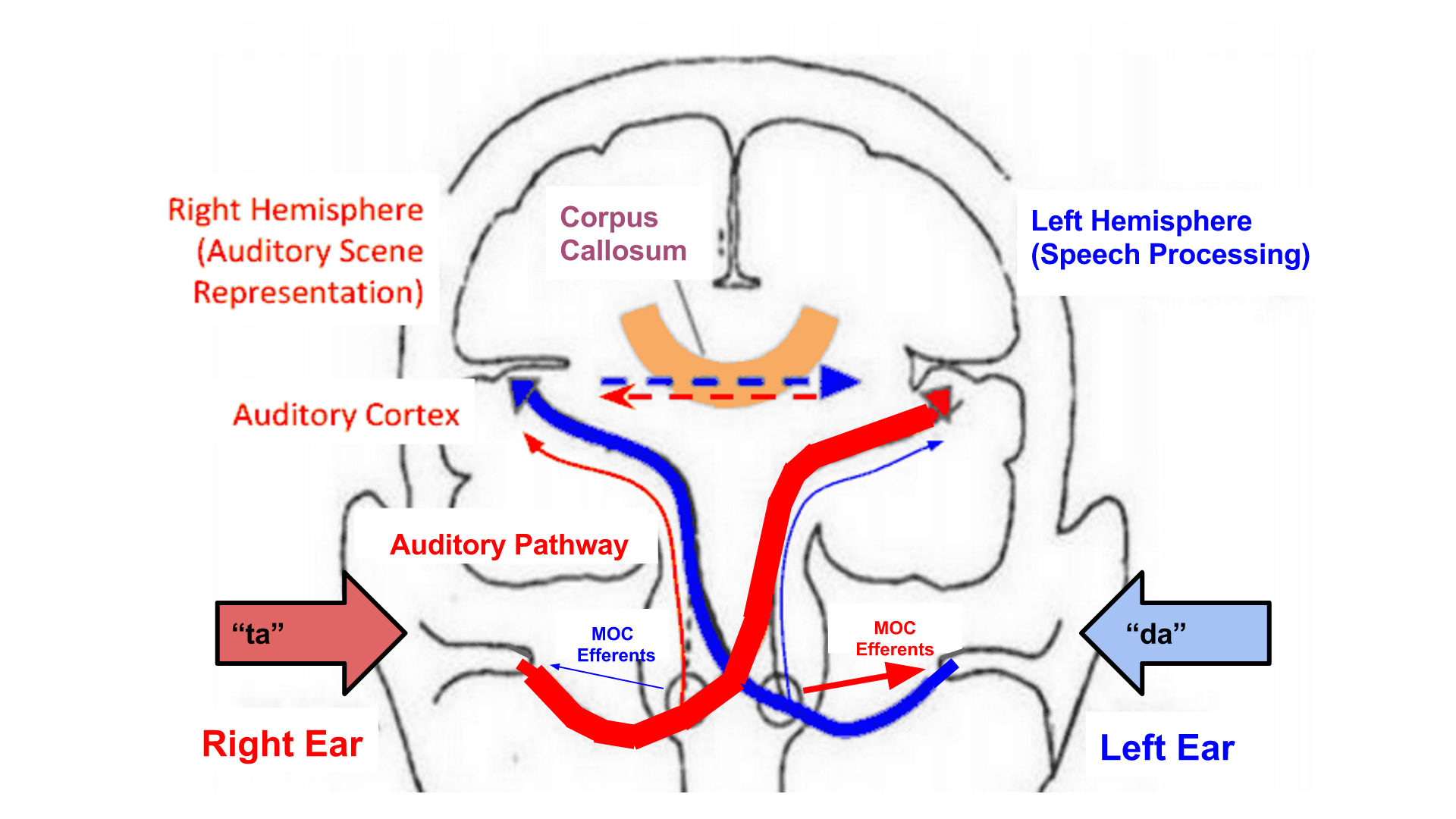
Auditory Issues and Associated Health Conditions
| Condition / Issue | Description & Experience | Clinical Overlap |
|---|---|---|
| APD | Brain struggles to interpret sounds, particularly speech. Feels like listening to a radio with static. | Frequently co-occurs with ADHD and dyslexia. |
| Hyperacusis | Intense physical sensitivity to everyday sounds. Sounds perceived as painfully loud or sharp. | Linked to Tinnitus and increased neural synchrony. |
| Misophonia | Strong "fight-or-flight" reaction to specific "trigger" sounds (chewing, tapping). | Associated with anxiety and OCD-like patterns. |
| Synesthesia | Auditory-tactile mixing; sounds trigger involuntary physical sensations on the skin. | More common in autistic populations; high connectivity. |
| Connective Tissue | hEDS can lead to laxity in the middle ear muscles, worsening sound sensitivity. | hEDS is statistically more prevalent in autistic folks. |
| Dysautonomia | POTS involves chronic sympathetic arousal, making noises feel more threatening. | Often co-occurs; lowers "meltdown" threshold. |
| MCAS | Inflammatory flares can temporarily heighten auditory and visual sensitivities. | Neuroinflammation affects sensory processing. |
Scoring Rubric: Sound & Noise
| Score | Description |
|---|---|
| 0/5 | Acoustically Hostile: High-volume "muzak," echoing hard surfaces, and shouting. A "wall of sound" that makes communication or presence physically painful. |
| 1/5 | Overwhelming: Constant background noise with no dampening. High-frequency hums from electronics and unpredictable, sharp noises like loud hand dryers. |
| 2/5 | Fatiguing: Typical "open-plan" noise. Significant echo and reverberation make it exhausting to focus or hold a conversation against the background din. |
| 3/5 | Managed: Basic acoustic considerations are present. Some soft surfaces help with echo, and background music is kept at a moderate, though perhaps inconsistent, level. |
| 4/5 | Acoustically Friendly: Intentional use of sound-absorbing materials. Low background hum, no "piped" pop music, and clear zones for different noise levels. |
| 5/5 | Sensory Sanctuary: Expertly designed soundscape. Use of acoustic baffles, silent appliances, and "Quiet Zones." The environment feels grounded and calm. |
Smells & Airflow +
The Olfactory Experience: Beyond "Strong Smells"
For many autistic individuals, the sense of smell is a primary way of navigating the world—and its importance cannot be overstated. We often possess a heightened olfactory sensitivity, but the challenge isn't just the intensity; it’s the processing.
A key issue is olfactory habituation. While a neurotypical brain might eventually "tune out" a background scent, many autistic people cannot filter out that sensory data. To us, a background smell remains "loud" and demanding of our attention indefinitely.
Key Criteria for Sensory-Friendly Reviews
- Avoidance of Overpowering Scents: While some smells are context-dependent (a coffee shop should smell like coffee), we look for environments that avoid dominant, cloying, or artificial scents. We recognize this is subjective, but "scent-neutral" is always the gold standard.
- Compartmentalization: Effective design should keep specific smells contained. Kitchen aromas, bathroom odors, and cleaning chemicals should be localized and not allowed to bleed into general seating or retail areas.
- Fragrance-Free Policies: We look for spaces that avoid synthetic fragrances, including air fresheners, scented soaps, and pungent cleaning detergents. For many, these aren't just "annoying"—they are medical triggers for migraines, asthma, and sensory shutdowns.
- Outdoor Buffers: A space loses accessibility if it allows outdoor pollutants—like vehicle exhaust from a busy road or fumes from neighboring businesses—to seep inside.
- Airflow and Ventilation: High-quality HVAC systems are essential. We are highly sensitive to "stuffy" air, mold, dust, and smoke.
- Note on Transportation: It is critical that stations, trains, and buses are designed to vent exhaust properly. Constant exposure to fumes is a major barrier to transit accessibility.
A Universal Benefit: Managing the "smellscape" of a room isn't just an autistic preference; it is a fundamental pillar of inclusive design. Improved air quality and reduced chemical fragrances create a healthier, more comfortable environment for everyone.
The Autistic Sensory Experience of Smell
For many autistic individuals, the sense of smell (olfaction) isn't just a background data point—it is a primary, often overwhelming way of experiencing the world. Because the olfactory bulb is directly connected to the amygdala and hippocampus (the brain's centers for emotion and memory), smells can trigger intense emotional or physiological reactions more rapidly than other senses.
The experience generally falls into two categories: hypersensitivity and hyposensitivity, though many people fluctuate between both.
- Environmental Intensity: A "normal" scent, such as someone peeling an orange or a freshly cleaned floor, can feel as intrusive as a loud alarm. This can lead to "sensory avoidance," where an individual may struggle to enter certain buildings (like hospitals, restaurants, or perfume shops) because the olfactory "noise" is too loud to process.
- The Flavor Connection: Because smell and taste are neurologically intertwined, olfactory sensitivity often manifests as "picky eating." A food might taste "wrong" or overwhelming not because of the tongue’s receptors, but because the aroma is too intense to manage during mastication.
- Olfactory Grounding: Conversely, some autistic individuals seek out specific, strong scents (hyposensitivity) as a form of "stimming." This might involve smelling non-food items like markers, rain on pavement, or specific fabrics to help regulate the nervous system and provide a sense of comfort.
Summary of Olfactory & Gustatory Conditions
| Condition / Issue | Description & Experience | Clinical Overlap |
|---|---|---|
| Hyperosmia | An increased olfactory acuity or an "overwhelming" sensitivity to smells. Minor scents are perceived with extreme intensity. | Often associated with Mast Cell Activation Syndrome (MCAS), pregnancy, or autoimmune flares. |
| Gustatory Hyperesthesia | An acute or excessive sensitivity to the sense of taste. Flavors feel "magnified," often making complex or spicy foods painful or repulsive. | Closely linked with Avoidant/Restrictive Food Intake Disorder (ARFID) and hyper-reactive taste buds. |
| Variable Hyperesthesias (w/ Autonomic Response) | Fluctuating sensitivity to smell or taste that triggers involuntary physical reactions like nausea, gagging, or vasodilation (flushing). | Indicates Dysautonomia or a highly reactive Vagus Nerve response to sensory input. |
| Osmophobia-Induced Headache | A psychological or physical aversion to odors that acts as a primary trigger for severe head pain or light sensitivity. | A hallmark symptom of Chronic Migraine and certain types of Cluster Headaches. |
| Lexical-Gustatory Synesthesia | A rare neurological cross-wiring where hearing or reading specific words triggers an involuntary, consistent taste on the tongue. | Linked to Neural Hyperconnectivity, a common trait in the autistic brain's structural development. |
The Olfactory Accessibility Scale
| Score | Designation | Description |
|---|---|---|
| 0/5 | Sensory Hazard | Unbearable and physically painful. Dominated by heavy chemical fumes, exhaust, or thick "unmasked" odors. Zero ventilation. Likely to trigger immediate migraines or asthma in those susceptible. Avoid. |
| 1/5 | Poor | Pervasive use of synthetic air fresheners or "signature scents." Strong "smell-bleed" from kitchens or restrooms into all areas. Air feels thick, stagnant, or "stuffy." |
| 2/5 | Below Average | Noticeable background scents that never fade and are hard to habituate to. Scented cleaning products are obvious. Some outdoor pollutants (like exhaust) might be detectable inside. |
| 3/5 | Neutral | Standard environment. No aggressive artificial fragrances, but no special air filtration either. Smells are present but manageable for short durations. |
| 4/5 | High Accessibility | Consciously fragrance-free. Excellent compartmentalization (e.g., in food businesses, you cannot smell the kitchen from the seating area). Fresh, moving air with no detectable "chemical" trail. |
| 5/5 | Gold Standard | "Scent-neutral." Likely high-grade HEPA or carbon air filtration. Zero synthetic fragrances. Total isolation of odors. The air feels crisp and "invisible"—the ideal sensory rest. |
Cleanliness +
This category, Cleanliness, evaluates the environment as both a sensory baseline and a biological necessity. For many autistic individuals, a "dirty" space isn't just an eyesore—it is a source of tactile distress, cognitive clutter, and legitimate medical risk. High scores are awarded to businesses that achieve a "sensory-neutral" clean: sanitized and organized without the use of aggressive chemicals, perfumes, or loud machinery.
Key Evaluation Pillars
1. The Sensory "Baseline"
When a space is consistently clean, it creates a predictable environment. For someone who might already be struggling with the noise of a crowd or the flicker of overhead lights, cleanliness provides a "calm" background.
- Reduced Visual Noise: A tidy, organized space reduces the amount of visual information the brain has to process. Clear surfaces mean fewer distractions and less cognitive load.
- Tactile Safety: Knowing that a surface isn't going to be "sticky" or "grimy" removes a significant source of anxiety. For many, the "sensory ick" of an unexpected texture can be physically painful or induce nausea.
- Predictability: A business that is always clean feels safe and reliable. It allows an autistic person to build a mental map of what to expect, which lowers overall anxiety.
2. Olfactory & Auditory Impact (The "Price" of Clean)
Ironically, the act of cleaning or the products used can often be more distressing than a little bit of dust. The method of cleaning is as important as the result.
- Olfactory Overload: Many commercial cleaning agents (bleach, heavy floral scents, or "industrial lemon") are incredibly pungent. For a hypersensitive nose, these can feel like a physical assault, leading to headaches or "sensory masking" fatigue.
- Visual Glare: High-gloss, "squeaky clean" floors might look great to a manager, but for someone with light sensitivity, the reflection of overhead fluorescent lights off a polished floor can be blinding or disorienting.
- Auditory Triggers: The sound of a high-powered vacuum, a floor buffer, or even the sharp "clack" of a janitor’s cart can be jarring and painful.
- Tactile Residue: Sometimes, cleaning leaves a film or a "tacky" feeling on tables or handrails. This unexpected texture can be a major trigger for sensory avoidance.
3. Biological & Medical Necessity
Because many autistic people have co-occurring immune, metabolic, or inflammatory conditions, cleanliness is preventative healthcare.
- Infection Control: Reducing the presence of pathogens for those with lower antibody levels or "primed" immune systems.
- Allergen Management: Minimizing dust, mold, and dander that can trigger respiratory distress or chronic inflammation.
- GI Hygiene: High standards for food and dining surfaces to protect those with gastrointestinal sensitivities and "gut-brain axis" vulnerabilities.
The Biological Reality: More Than Just Sensory
While the sensory "ick" factor is real, the biological stakes for autistics are often much higher. Research consistently shows that autism frequently co-occurs with a range of physical health challenges that make a "dirty" environment significantly more dangerous. Here is a breakdown of why unhygienic spaces pose a disproportionate risk to the autistic community.
1. Immune System Dysregulation & Infection Risk
Studies indicate that many autistic individuals have a "primed" or dysregulated immune system. This can manifest in two ways:
- Increased Susceptibility: Lower levels of key protective antibodies (like IgG and IgM) can make it easier to catch contagious illnesses (colds, flu, or stomach bugs) from surfaces or poorly ventilated air.
- Prolonged Recovery: Because the immune response may not "shut off" or "turn on" correctly, a simple infection that a neurotypical person might shake off in three days can lead to weeks of fatigue, brain fog, or secondary infections.
2. High Prevalence of Autoimmune & Inflammatory Conditions
Autistic people are statistically at a much higher risk for immune-mediated conditions. Exposure to dust, mold, or bacteria in a public space can trigger these underlying issues:
- Autoimmune Disorders: There is a significantly higher rate of conditions like Type 1 diabetes, rheumatoid arthritis, and Celiac disease among autistic populations.
- Chronic Inflammation: Many autistic individuals live in a state of "low-grade" systemic inflammation. A dirty environment acts as a "trigger" that can spike this inflammation, leading to physical pain and cognitive "slumps."
- Allergic & Respiratory Vulnerability: High rates of asthma and environmental allergies mean that dust-heavy or moldy spaces can cause immediate respiratory distress or skin flares.
3. Metabolic and GI Vulnerabilities
The "gut-brain axis" is a major area of study in autism. Many autistic people have:
- Gastrointestinal (GI) Sensitivity: Issues like "leaky gut" or microbiome dysbiosis mean that exposure to food-borne bacteria or unhygienic dining surfaces can cause severe GI distress compared to the general population.
- Metabolic Differences: Mitochondrial dysfunction and metabolic conditions (like insulin resistance) are more common, which can impair the body’s ability to repair itself after being stressed by an unhygienic environment.
The "Negative Outcome" Chain
| Step | Impact on Autistic Individuals |
|---|---|
| Exposure | Pathogens, mold, or allergens are introduced to a sensitive system. |
| Acute Reaction | Rapid immune/inflammatory spike (asthma attack, hives, or "brain fog"). |
| Systemic Stress | The body uses significant energy to fight the "threat," leading to autistic burnout. |
| Lingering Illness | A higher likelihood of the illness becoming chronic or triggering an autoimmune flare. |
Summary for Businesses
Cleanliness is preventative healthcare. For an autistic customer or employee, a sanitized environment isn't a luxury; it’s the baseline required to keep their physical body functioning and out of a cycle of chronic illness.
Summary: Good vs. Bad Cleanliness
| Feature | The "Good" Experience | The "Bad" Experience |
|---|---|---|
| Scent | Neutral, "air-like," or fragrance-free. | Heavy bleach, ammonia, or strong perfumes. |
| Visuals | Organized, uncluttered, matte finishes. | Cluttered, "busy" decor, or high-glare floors. |
| Touch | Smooth, dry, and predictable surfaces. | Sticky, oily, or "gritty" surfaces. |
| Timing | Cleaning happens after-hours. | Sudden loud vacuuming while customers are present. |
The "Bottom Line"
For a business to be truly inclusive, "clean" should mean sensory neutral. The goal isn't just to remove dirt, but to minimize the sensory "volume" of the room. Using unscented products, opting for matte finishes instead of high-gloss ones, and keeping maintenance noise to a minimum makes a space significantly more accessible.
Scoring Rubric: Cleanliness
| Score | Description |
|---|---|
| 0/5 | Hazardous: Visible mold, grime, or unsanitary surfaces. High risk of infection or allergic reaction. Odors are overwhelming and "industrial." |
| 1/5 | Neglected: Cluttered and disorganized. Surfaces feel "sticky" or "gritty." Cleaning is done reactively and often involves loud, disruptive equipment. |
| 2/5 | Substandard: Surfaces appear "wiped" but leave a tacky residue. Heavy use of bleach or floral scents to mask poor hygiene, causing olfactory overload. |
| 3/5 | Standard: Generally hygienic but visually busy. Uses standard commercial cleaners that may still have lingering scents or create high-glare "shiny" floors. |
| 4/5 | Considerate: Organized and tidy with reduced visual noise. Uses low-scent products and performs major cleaning tasks outside of business hours. |
| 5/5 | Sensory Neutral: Pristine, fragrance-free, and matte. The space feels "air-like" and safe. Provides a predictable, low-impact environment for the immune system. |
Crowds & Interactions +
The Social and Spatial Environment
It is a common misconception that autistic individuals are inherently anti-social. In reality, many autistic people are extroverted, deeply value connection, and crave community. The barrier to entry isn't necessarily the people—it is the chaotic environment and sensory toll that crowds create.
This category evaluates how a space manages the physical, social, and psychological weight of human traffic. For an autistic person, a crowd isn't just a group of people; it is a complex, unpredictable environment that taxes the sensory system and drains executive function. A high score means the space provides "spatial autonomy" and reduces the exhausting burden of being perceived.
When evaluating a space, we look at how a business manages the flow, positioning, and culture of its human traffic. Even though a business cannot entirely control how many people show up, they can control the spatial design that mitigates the overwhelm.
The Anatomy of Crowd Overwhelm
For an autistic person, navigating a crowd is a multi-layered event that taxes several systems at once:
- Sensory Cacophony: Crowds generate an unpredictable wall of sensory input. The overlapping din of hundreds of conversations, sudden loud laughs, and the mixture of perfumes, foods, and body heat can quickly lead to sensory overload.
- Spatial Entrapment & Unwanted Proximity: The physical stress of losing your "personal bubble" is profound. Situations like standing in a tightly packed queue—where a stranger might stand two inches behind you having a loud phone conversation—force the nervous system into a state of hyper-vigilance.
- Social Chaos & "Landmines": Dense spaces are inherently unpredictable. Navigating a crowded room requires constantly calculating the trajectories of others to avoid bumping into them, reading the room for unwritten social rules, and dodging unexpected physical touch.
- The Weight of Being Perceived: This is one of the most overlooked forms of sensory and cognitive overwhelm. Simply being in the sightline of dozens of strangers requires immense energy. The constant awareness of being watched, judged, or perceived by others is exhausting, even for highly social autistic individuals.
How Spaces Can Be More (or Less) Accommodating
While crowds are sometimes unavoidable, the design of the space dictates whether that crowd feels like a community or a trap.
The Overwhelming (Less Friendly) Space:
- Chaotic Flow: "Free-for-all" layouts with no clear lines or pathways, forcing people to weave through clusters of standing groups.
- Feeling Trapped: Narrow aisles and seating arrangements where a person is physically blocked in by others, with exits and bathrooms difficult to reach or locate.
- High Exposure: Layouts that force every customer to be "on display." For example, seating where everyone faces the center of the room, maximizing the feeling of being perceived.
The Accommodating (More Friendly) Space:
- Intentional Boundaries: Visual markers (like floor decals in queues) that establish a cultural expectation of personal space and prevent people from crowding one another.
- Sanctuaries and "Off-Ramps": Wide transitional spaces and clear, unobstructed access to exits and restrooms. If the crowd becomes too much, an autistic person knows they can escape without having to push through a wall of bodies.
- Strategic Positioning: Providing seating options that allow for privacy or "low exposure"—such as booths or corner tables that face away from the main thoroughfare. This allows an autistic person to socialize with their group without carrying the cognitive weight of being perceived by the rest of the room.
Key Evaluation Pillars
1. Spatial Autonomy (Entrapment vs. "Off-Ramps")
When a meltdown or sensory overload is imminent, the ability to leave quickly is paramount.
- Frictionless Exits: Are exits and restrooms clearly visible and easy to access without having to push through a wall of bodies?
- Transitional Space: Are the aisles wide enough that you aren't physically blocked in by other patrons or forced to squeeze past strangers?
2. Social Boundaries & Proximity
Managing the "unwritten rules" of a crowd so the visitor doesn't have to.
- Queue Management: Using visual markers (like floor decals or stanchions) to establish a cultural expectation of personal space and prevent people from crowding one another.
- Flow Control: Layouts that direct foot traffic logically, preventing the need to constantly calculate trajectories or dodge unexpected collisions.
3. The "Exposure" Tax (Being Perceived)
Just being in the sightline of dozens of strangers requires immense cognitive energy. We evaluate how the space allows you to exist privately.
- Low-Exposure Seating: The availability of booths, high-backed chairs, or corner tables that face away from the main thoroughfare.
- Visual Privacy: Avoiding layouts where everyone is forced to face the center of the room or sit at communal, highly exposed tables unless they choose to.
Scoring Rubric: Crowds & Interactions
| Score | Description |
|---|---|
| 0/5 | Trapping: Wall-to-wall crowds with a "free-for-all" flow. Zero personal space, forced physical proximity, and exits/bathrooms are blocked or impossible to reach. |
| 1/5 | Overwhelming: Highly chaotic. Narrow aisles and high-exposure seating make you feel constantly "in the way" or watched. High likelihood of unwanted social friction or physical bumping. |
| 2/5 | Strenuous: Standard dense layout. You have to constantly navigate around others, and queue lines lack boundaries, leading to strangers standing uncomfortably close. |
| 3/5 | Functional: Average crowd management. Movement is possible, but there are no intentional "off-ramps" or private seating options to escape the sightlines of the crowd. |
| 4/5 | Considerate: Clear visual boundaries (like floor markers) and wide thoroughfares. Seating includes "low exposure" options (booths, corners) to reduce the feeling of being watched. |
| 5/5 | Spatially Autonomous: Expertly managed flow. Zero forced proximity. Plentiful private seating, clear pathways, and obvious "sanctuaries" allow you to exist in a community without feeling overwhelmed by it. |
Staff & Services +
This category evaluates the "human interface" of a business. For an autistic person, interacting with staff can be the most unpredictable and taxing part of a visit. We look for a service culture that moves away from rigid social expectations and toward patience, clarity, and proactive assistance. High scores are awarded to teams that recognize that "invisible" disabilities are real and that being overwhelmed is a valid human response.
Key Evaluation Pillars
1. The "Invisible Need" Awareness
Autism doesn't have a "look." We evaluate whether staff understand that a well-dressed, articulate adult might still be having a sensory meltdown or a cognitive "stall."
- Zero-Judgment Culture: Staff remain patient even when a visitor repeats a question, takes a long time to process information, or displays atypical body language (stimming, lack of eye contact, or using a flat tone).
- Validation of Overwhelm: If a visitor expresses that it is "too loud" or "too bright," staff respond with empathy and solutions rather than skepticism.
2. Communication Clarity & Multi-Modal Support
Relying solely on verbal instructions is a cognitive barrier.
- Plain Language: Staff are trained to give directions in short, literal steps (e.g., "First, put your bag here. Second, take out your ID") rather than using vague idioms or overwhelming "data dumps."
- Visual Backups: High-scoring businesses have staff who can point to a map, a written menu, or a visual "how-to" guide when explaining a process.
- Social Scripting: Staff allow for "low-social" interactions, such as using digital kiosks, written notes, or mobile ordering, without making the visitor feel "difficult."
3. Proactive Conflict & Overload Management
Staff should be the "regulators" of the environment, not a source of more stress.
- Spotting the Stall: Trained staff can identify when a person is "frozen" by choice-paralysis or sensory overload and will calmly offer a quiet place to sit or a simplified version of the task.
- De-escalation: If a visitor is struggling, staff lower their own volume, give the person physical space, and avoid "crowding" them with too many people or questions at once.
- Wait-Time Transparency: Staff provide honest, specific updates on delays (e.g., "It will be 12 minutes") rather than vague answers ("It’ll be a little bit"), which helps manage anxiety.
Summary: The Service Shift
| Feature | The Overwhelming Interaction | The Accommodating Interaction |
|---|---|---|
| Expectations | Assumes "common sense" and "standard" social cues. | Assumes everyone processes information differently. |
| Tone | Impatient, rushed, or sarcastic. | Calm, literal, and patient. |
| Instruction | Multi-step verbal commands. | One step at a time; visual/written backups. |
| Reaction to Stress | Pressure to "hurry up" or conform. | Offers space, time, and a quiet area to reset. |
The Human "Curb-Cut": When staff are trained to be clear, patient, and visual, it doesn't just help autistic people—it helps tourists, elderly patrons, people with social anxiety, and anyone having a stressful day. A high service score means the "human" part of the business is as well-designed as the physical space.
Scoring Rubric: Staff & Service
| Score | Description |
|---|---|
| 0/5 | Hostile: Staff are impatient, mocking, or aggressive toward those who struggle with "standard" social cues or multi-step instructions. |
| 1/5 | Rigid: Service is "by the book" only. Staff expect everyone to intuitively know exactly what to do and show visible frustration if a visitor is slow or confused. |
| 2/5 | Indifferent: Staff are technically present but unobservant. They provide no guidance for complex tasks and may "judge" those who don't "look" like they need help. |
| 3/5 | Helpful (Reactive): Staff are polite and will help if asked, but they don't proactively spot someone who is struggling or offer alternative ways to communicate. |
| 4/5 | Informed (Proactive): Staff are trained to spot signs of overstimulation. They offer plain-language instructions and don't take a lack of eye contact personally. |
| 5/5 | Radically Inclusive: Staff treat "not knowing what to do" as the default. They provide visual aids, offer "low-social" options, and create a zero-judgment environment. |
Signage & Menus +
This category evaluates how a business communicates its most vital information. For an autistic person, poor signage can turn a simple errand into a high-stakes "detective game." We look for clear, literal, and visually organized information that reduces the "Executive Function Tax" and eliminates the need for stressful social guessing.
Key Evaluation Pillars
1. Environmental Wayfinding (The "Map")
A space should tell you where to go without you having to ask a stranger.
- Literal Labeling: Signs should say exactly what is behind a door. Avoid metaphors or "themed" labels that require cultural translation.
- Placement & Consistency: Signs should be placed at eye level and appear at every "decision point" (intersections or stairs) so the visitor never feels lost.
- Pictograms & Icons: Pairing text with universal symbols (e.g., a fork and knife icon for a cafe) helps the brain process information faster than reading words alone.
2. Menu Design & Information Architecture
Menus are often a primary source of "choice paralysis" and sensory overwhelm.
- Visual Hierarchy: Using bold headers and clear sections (e.g., "Drinks," "Main Meals," "Desserts") so the eye can easily scan the options.
- Photography & Realism: High-quality photos of the actual food or products allow for "mental mapping" of the sensory experience (texture, size, color) before ordering.
- The "No-Glare" Rule: Avoiding glossy laminated menus or bright digital screens that reflect overhead lights, making the text unreadable.
3. Language & Complexity
Reducing the cognitive load of "deciphering" what is being offered.
- Plain Language: Eliminating jargon, puns, or ambiguous descriptions. If a service costs $20, the sign should clearly state "$20" rather than "A Jackson" or "Twenty Bones."
- Ingredient Transparency: Clearly listing allergens or sensory "dealbreakers" (like cilantro, onions, or crunchy vs. soft textures) to prevent a negative sensory experience.
- Error-Proofing: Providing clear instructions for processes—like how to use a self-checkout or where to return a tray—using a simple "1-2-3" step visual guide.
Summary: The Clarity Shift
| Feature | The Overwhelming Signage | The Accommodating Signage |
|---|---|---|
| Font & Style | Script, "handwritten," or low-contrast. | Sans-serif, bold, and high-contrast. |
| Language | Metaphorical, "clever," or vague. | Literal, plain, and direct. |
| Context | Text-heavy and cluttered. | Paired with universal pictograms/icons. |
| Menu Format | Fast-flipping digital screens or tiny print. | Static, organized, and includes photos. |
The "Literal" Advantage: When a sign says "Restroom" with a clear icon, it removes the social anxiety of "Am I in the right place?" For an autistic person, clarity isn't just helpful—it’s the difference between feeling independent and feeling helpless.
Scoring Rubric: Signage & Menus
| Score | Description |
|---|---|
| 0/5 | Inaccessible: No signage or menus available. Relies entirely on verbal interaction or "hidden" social knowledge to function. |
| 1/5 | Cryptic: Uses "clever" or metaphorical language (e.g., "The Watering Hole" for a restroom). Tiny fonts, low contrast, or cluttered "chalkboard" style menus. |
| 2/5 | Visual Noise: Overwhelming amount of information at once. High-glare digital screens that flip too fast to read, or menus with busy backgrounds and no photos. |
| 3/5 | Standard: Functional and literal, but lacks accessibility features. Relies solely on text without icons and offers no digital or large-print alternatives. |
| 4/5 | Cognitively Clear: High-contrast, sans-serif fonts with universal pictograms. Menus are organized into logical categories with clear pricing and ingredients. |
| 5/5 | The Gold Standard: Multi-modal and intuitive. Includes "Social Stories" or photo-based menus, color-coded wayfinding, and a persistent "You Are Here" logic. |
Calmness & Comfort +
Creating a framework for Calmness and Comfort requires looking beyond just the absence of negative sensory input. It focuses on "nervous system resonance"—the elements that signal to an autistic person that they are safe, understood, and permitted to exist without performance.
Here is a proposed rating system and checklist for evaluating these "soft" environmental factors.
1. Predictability & Cognitive Load
A space feels like home when you don't have to solve a puzzle to navigate it. High scores here mean the environment explains itself.
- Legible Layout: Can the entire space be understood from the entrance? Hidden corridors or confusing "loops" increase baseline anxiety.
- Intuitive Wayfinding: Are signs clear, consistent, and placed at eye level? Is there a map or a visual guide available before arrival?
- Transparent Expectations: Are the "unspoken rules" made explicit? (e.g., "Feel free to move the chairs," "Water is self-serve," or "Wait here to be greeted").
- Transition Support: Are there clear physical markers between high-energy areas (the street, a lobby) and low-energy areas (the main space)?
2. Social Safety & "Unmasking" Permission
This evaluates the human element—whether the social atmosphere requires a high degree of "performance" or allows for natural autistic expression.
- Judgment-Free Zones: Is there evidence that stimming, using AAC (Augmented and Alternative Communication), or wearing noise-canceling headphones is normalized?
- Low-Demand Interaction: Does the business allow for "low-stakes" transactions? (e.g., online ordering, kiosks, or the ability to browse without being shadowed by staff).
- Communication Flexibility: Can staff pivot between verbal, written, or visual communication without friction or frustration?
- The "Vibe" of Permanence: Does the space feel settled and consistent, or is it prone to frequent, jarring changes in decor or staff?
3. Physical Coziness & Nervous System Regulation
This focuses on the tactile and atmospheric qualities that help ground a person's body.
- Seating Variety: Are there "enclosed" seating options (booths or high-backed chairs) that provide a sense of back-protection and privacy?
- Tactile Quality: Does the furniture use "honest" materials (wood, soft fabrics, stone) rather than cold, industrial plastics or metals?
- Natural Integration: Is there a connection to the outdoors? Natural light (filtered), plants, or views of greenery act as a biological "reset" button.
- Acoustic Softness: Are there sound-absorbing materials (rugs, acoustic panels, books) that prevent echoes and "bright" noises from bouncing?
Scoring Framework: The "Comfort & Calm" Index
| Metric | Score (1-5) | Key Indicators |
|---|---|---|
| Autonomy | Can I control my environment (dimming a lamp, moving a chair)? | |
| Privacy | Are there "micro-retreats" or nooks where I am not perceived? | |
| Atmosphere | Is the lighting warm/indirect and the scent neutral or absent? | |
| Human Element | Do the people here seem patient and literal, or rushed and "socially heavy"? | |
| Grounding | Does the space feel physically "heavy" and stable, or airy and chaotic? |
The "Nervous System Check"
When evaluating a space, ask these three questions to find its "true" score:
- The Exit Test: If I needed to leave suddenly, is the exit clear and accessible without social "blockage"?
- The Stimming Test: Would I feel comfortable rocking, flapping, or using a fidget toy in the center of this room?
- The Duration Test: Could I spend three hours here without feeling like my "battery" was being drained by the environment itself?
This scoring rubric is designed to measure the "invisible" quality of a space—the degree to which it supports nervous system regulation and allows for a sense of belonging without the need for social performance.
The Calmness & Comfort Rubric
| Score | Designation | Description of the Environment |
|---|---|---|
| 0/5 | Hostile | Aggressively unpredictable. High "social friction" (mandatory small talk, rigid eye contact expectations). Chaos in layout, lighting, and noise. A sense of being watched or "out of place." |
| 1/5 | Stressful | Overwhelming sensory input combined with ambiguous rules. No place to retreat. Staff or environment feels impatient. Requires constant masking and high cognitive load to navigate. |
| 2/5 | Draining | Tolerable for short bursts, but requires active effort to stay regulated. Functional, but "cold." Standard commercial lighting, no acoustic dampening, and a "hurried" atmosphere. |
| 3/5 | Neutral | A "safe enough" baseline. Basic accessibility is met. Clear signage and predictable layout. Social interactions are professional and literal. No specific "comfort" features, but no major triggers. |
| 4/5 | Welcoming | Intentional neuro-inclusive design. Warm, indirect lighting and soft acoustics. Clear "permission" to exist (e.g., quiet nooks, visible fidgets, or AAC support). Staff are calm and flexible. |
| 5/5 | Resonant | "The Home Frequency." A space that actively lowers heart rate. Tactile richness (wood, plants, textiles). Total autonomy over your immediate bubble. You feel invisible in a good way—free to unmask and simply be. |
Detailed Evaluation Criteria
To reach a specific score, evaluate the space against these three pillars:
1. The "Safety of Solitude" (Privacy & Autonomy)
- High Score (4-5): Presence of high-backed booths, deep window seats, or "liminal spaces" where you can observe without being perceived. Physical control over your environment (dimmable lamps, adjustable seating).
- Low Score (0-1): Open-plan layouts, glass walls, or "fishbowl" designs where you are visible from all angles. All furniture is bolted down or uniform.
2. The "Social Script" (Predictability & Interaction)
- High Score (4-5): Expectations are posted or obvious. "Self-service" is the default, but help is available in multiple formats (text, visual, or verbal). Silence is respected and normalized.
- Low Score (0-1): Mandatory "greetings" at the door. Vague procedures (e.g., "sit anywhere" followed by being told a table is reserved). High-pressure sales or social "performance" required to get needs met.
3. The "Biological Anchor" (Atmosphere & Sensory Texture)
- High Score (4-5): Use of "heavy" or grounding materials. Natural, non-flickering light. A complete absence of synthetic fragrances. Background noise is low-frequency or dampened by rugs and books.
- Low Score (0-1): Fluorescent flickering, high-pitched mechanical hums, or "bright" acoustics (echoes). Scents of heavy cleaning chemicals or perfumes. Cold, industrial surfaces.
The "Final Polish" Check
When assigning a final score, consider the Recovery Time:
- 0-1/5: Requires hours of "dark room time" to recover after a visit.
- 2-3/5: Requires a brief reset or a quiet car ride home.
- 4-5/5: Leaves you feeling more regulated than when you arrived; the visit itself acts as a form of sensory "recharge."
Safety +
True safety for autistic individuals extends far beyond physical security; it is the absence of the conditions that demand hypervigilance. It is an environment where the nervous system is not constantly scanning for social threats, physical boundary violations, or cognitive traps.
Here is a framework and scoring rubric for evaluating Safety, focusing on the physical, emotional, cognitive, and social dimensions required to let down one's guard.
1. Bodily Autonomy & Physical Boundaries
Physical safety means more than just a well-lit room; it means explicit respect for personal space and physical limits.
- Consent-Based Interaction: Is it standard practice to ask before touching, guiding, or moving an individual's personal items?
- Spatial Generosity: Are walkways wide enough to avoid accidental brushing against others? Is there adequate personal space in waiting areas or queues?
- Escape Viability: Are exits clearly marked, unlocked, and physically unobstructed, allowing for an immediate "eject" if overwhelm hits?
2. Social & Emotional Security (The "Anti-Stare" Factor)
Emotional safety is the freedom from being perceived as a threat, a joke, or an anomaly. It is the assurance that unmasking will not lead to social punishment.
- Protection from Scrutiny: Can you exist in the space with atypical body language (stimming, avoiding eye contact, using ear defenders) without drawing stares, whispers, or unwanted inquiries?
- Staff Advocacy: Do the staff actively or passively set the tone? In a truly safe space, staff will intervene or redirect if other patrons are being intrusive or judgmental.
- Respect for Non-Speaking States: Is the choice to remain silent, use AAC, or communicate entirely through text respected without pressure or infantalization?
3. Cognitive Integrity & Anti-Exploitation
Cognitive safety means a person's reality and processing speed are respected. It is the absence of manipulation or predatory tactics.
- No Gaslighting: If a patron expresses that a light is too bright or a sound is painful, is their reality validated rather than dismissed (e.g., "It's not that loud" or "Nobody else is complaining")?
- Transparent Intentions: Are business practices clear and straightforward? Spaces with hidden fees, high-pressure upsells, or artificially manufactured urgency (e.g., "You have to decide right now") trigger cognitive threat responses.
- Processing Time: Is there a recognized right to pause, process information, and answer at one's own pace without being rushed or interrupted?
The Safety Rubric
| Score | Designation | Description of the Environment |
|---|---|---|
| 0/5 | Hostile | Active threat. High risk of non-consensual touching or forced proximity. Staff or patrons mock, stare, or openly judge atypical behavior. Exploitative practices, hidden rules, and gaslighting are present. Hypervigilance is absolutely necessary for survival. |
| 1/5 | Threatening | High friction. Personal space is routinely violated by design or culture. Staff are dismissive of sensory pain or communication needs. Pressure tactics are used. The space feels emotionally volatile or unpredictable. |
| 2/5 | Guarded | Physically secure, but socially precarious. You will not be physically harmed, but you will likely be stared at or misunderstood. Requires heavy masking to blend in and avoid friction. Constant low-level scanning for social missteps is required. |
| 3/5 | Neutral | The baseline of acceptable safety. Personal space is generally respected. Staff are polite, though perhaps uneducated on neurodivergence. You won't be bullied or exploited, but the burden of adapting to the environment still falls entirely on you. |
| 4/5 | Protective | Intentional safety. Boundaries are explicitly respected. Atypical communication and movement are ignored (in a good way) or seamlessly accommodated. Processes are transparent, with zero pressure. Hypervigilance begins to drop. |
| 5/5 | Sanctuary | Complete nervous system safety. A rare environment where you are insulated from both physical intrusion and social judgment. Autonomy is absolute. The culture of the space actively validates your reality and processing needs. You can fully drop your guard. |
Detailed Evaluation Criteria
1. The "Boundary Check"
- High Score (4-5): Physical proximity is never forced. Seating is movable or adequately spaced. Staff verbally narrate their actions before stepping into your personal bubble.
- Low Score (0-1): Crowded, bottlenecked layouts. A culture of unwanted casual touch (e.g., hand on the shoulder from staff). Forced physical proximity to strangers.
2. The "Vulnerability Check"
- High Score (4-5): If you were to experience a meltdown or shutdown, the space offers a private area to recover without drawing a crowd. The environment feels entirely devoid of predatory or manipulative dynamics.
- Low Score (0-1): Mistakes, confusion, or distress are met with impatience, condescension, or public reprimand. High-pressure sales or complex, deceptive instructions are standard.
3. The "Hypervigilance Check"
- High Score (4-5): The "rules of engagement" are so clear, and the acceptance of differences so ingrained, that the internal monologue of "Am I doing this right? Is someone looking at me?" goes entirely quiet.
- Low Score (0-1): Your threat-assessment radar is pinging continuously. You must maintain complete spatial and social awareness to avoid unwanted interactions, judgment, or physical bumping.
Cost, Affordability and Neuro-Financial Accessibility +
An entire book could be written on the topic of being autistic in our capitalist system. Here in the US, the economy is increasingly rampant with competition, exploitation, hyper-individualism, massive inequality, and workaholism, compounded by a severe lack of regulation, oversight, consumer protections, and social infrastructure.
This landscape puts autistic individuals at a distinct financial disadvantage, imposing an "Autistic Tax" in both obvious and covert ways, while rewarding cognitive and personality traits that are less prevalent in neurodivergent people. Anytime we interact with the world in a financial sense, we are at risk. This scoring category addresses that risk.
The importance of this category cannot be overstated. Many autistic, neurodivergent, disabled, and chronically ill people do not have a lot of spare cash. We can easily be coerced into buying something by aggressive salespeople or duped by hidden fees that non-autistic people tend to be more instinctively aware of. Businesses that prioritize affordability, price transparency, and accessible policies will receive higher scores in this category.
Part 1: The "Double Squeeze" and the Autistic Tax
The financial landscape for autistic adults is often described as navigating a "double squeeze": earning power is statistically lower, while the baseline cost of living is significantly higher. This phenomenon is frequently referred to as the "Autism Tax"—the literal and metaphorical price paid to navigate a world not designed for neurodivergence.
1. The Income Gap: Barriers to Earning
Even for highly skilled individuals, the path to a stable, well-paying career is often obstructed by structural biases.
- The Employment Gap: Statistically, autistic adults face some of the highest unemployment and underemployment rates of any disability group (often cited between 50% and 85%).
- The "Social Interview" Barrier: Traditional hiring processes prioritize "culture fit" and eye contact over technical competence. This can prevent qualified autistic people from ever getting through the door.
- The Promotion Ceiling: "Soft skills" and office politics often dictate upward mobility. An autistic employee may excel at their core tasks but be passed over for management roles because they don't participate in "standard" social networking.
- Education Debt without the Degree: Autistic students often struggle with the sensory and social demands of university life. Many leave with student loan debt but without a completed degree, making it harder to pay back those loans.
2. The Executive Function Tax
Executive dysfunction—difficulty with planning, starting tasks, and memory—is a common trait that carries a heavy price tag.
- Convenience Premiums: When the "cost" of cooking is a sensory meltdown, many rely on pre-cut vegetables, frozen meals, or food delivery. These "convenience" options are significantly more expensive than cooking from scratch.
- The Late Fee Cycle: Forgetting to pay a bill on time, missing a subscription cancellation deadline, or losing a library book leads to a steady stream of administrative fines.
- "ADHD/Autism Tax" on Groceries: Buying ingredients for a hyperfixation meal only to have the "sensory ick" set in a day later often results in wasted food and money.
3. Sensory and Health Maintenance
Living in a high-sensory world requires specialized equipment and environments that are rarely "standard."
- Sensory Gear: High-quality noise-canceling headphones, weighted blankets, and specific seamless or tagless clothing are essential for regulation but represent a high upfront cost.
- Specific Dietary Needs: Many autistic people have restricted diets due to sensory aversions or gastrointestinal (GI) sensitivities. Maintaining a "safe" diet—especially if it involves specific brands or organic produce—drives up grocery bills.
- Specialized Healthcare: Standard dentists or doctors can be sensory nightmares. Finding "neuro-affirming" providers often means going out-of-network or paying higher co-pays for specialists who understand sensory processing or co-occurring conditions like EDS or POTS.
4. Transportation and Housing
- Commuting Costs: For those who find driving overstimulating or dangerous due to processing speeds, public transit or rideshare services become a necessity. If public transit is also a sensory trigger, the cost of daily Ubers can consume a massive portion of a paycheck.
- The "Quiet" Housing Premium: To avoid sensory burnout, many autistic adults need housing in quieter neighborhoods or buildings with thick walls. These units are almost always priced higher than high-density, noisy urban apartments.
Summary: The Cost Comparison Baseline
| Expense Category | Neurotypical Baseline | Autistic "Tax" Adjusted |
|---|---|---|
| Grocery Bill | Bulk buying, cooking from scratch. | Brand-specific safe foods, pre-prepped meals. |
| Utilities | Standard usage. | Higher costs for 24/7 climate/air quality control. |
| Social Life | Low-cost "busy" environments. | Private spaces or "sensory-friendly" events. |
| Admin Fees | Automated or on-time payments. | Late fees, lost items, forgotten subscriptions. |
| Health | General practitioner (in-network). | Out-of-network specialists and therapists. |
Part 2: The Consumer Minefield
For many autistic adults, the "standard" consumer experience is built on social cues, rapid decision-making, and high administrative endurance—all of which act as a financial trap. Businesses often capitalize on these neurodivergent vulnerabilities in ways that can be financially devastating.
1. Predatory Sales Tactics: Exploiting Social Communication
Predatory sales rely on "social engineering" rather than the quality of a product, creating a significant disadvantage for those who process social information differently.
- Urgency and False Scarcity: Marketing that screams "Only 2 left!" or "Running Low!" or "Offer expires in 10 minutes!" is designed to bypass rational thought and trigger an emotional, impulsive response. For an autistic person who may struggle with rapid information processing, this can lead to "freezing" or high-stress compliance.
- Literal Interpretation: Autistic individuals communicate with a high degree of honesty and may take marketing claims at face value. Predatory sales rely on "reading between the lines"—which is cognitively taxing or non-intuitive.
- Social Compliance & Conflict Avoidance: Many autistic adults have been conditioned to be "people pleasers" or are hesitant to be "rude." Predatory sellers use a "hovering" technique, making it socially uncomfortable to walk away without a purchase.
- Difficulty Recognizing Manipulation: Research suggests that while autistic people are highly analytical, they may be less likely to recognize when a "friendly" interaction is actually a scripted attempt at manipulation.
2. Hidden Fees: Administrative Overwhelm
Hidden fees are rarely truly hidden; they are usually buried in complex legal language that requires a high cognitive load to decipher.
- Oversight and Detail Fatigue: When a contract is 20 pages long, the "wall of text" is overwhelming. An autistic person may focus intensely on the product details but miss the one-sentence fee hidden in Section 8, leading to unexpected recurring charges.
- The Cost of "Forgetfulness": Fees for late payments, missing a free trial cancellation window, or failing to return equipment are essentially fines for executive dysfunction.
- Administrative Overwhelm: Disputing a hidden fee often requires navigating a complex phone tree or speaking to a manager. The phone anxiety and social energy required to fight a $15 fee often exceed the value of the money itself, leading many to just "eat the cost."
3. Strict Return Policies: The "Return Barrier"
A 14-day return policy sounds reasonable to a neurotypical person, but it can be an impossible hurdle for someone navigating autistic burnout, someone with high-support needs, someone who is autistic (period), someone with executive function difficulties, or many other experiences/challenges.
- The Sensory Barrier: Returning an item requires a trip (many steps and logistical/executive/cognitive challenges to do that, especially just for a return) to a store (a high-sensory environment with bright lights, crowds, and loud music). If someone is near their sensory, cognitive, executive or energy limit, or if they have task paralysis or time management and coordination difficulties, they may avoid the store entirely, losing their refund.
- The "Scripting" Hurdle: Returning a defective item requires a social exchange. Many autistic people need to "script" conversations in advance. If the clerk goes "off-script" (e.g., asking unexpected questions or pushing for store credit), the resulting anxiety can cause the person to give up. There are many “unspoken” rules with these interactions, which benefits those “in the know” and those who are savvy communicators.
- The Receipt/Timing Trap: Keeping track of a physical slip of paper for exactly 30 days requires organized systems that many struggle to maintain. Strict policies that don't allow for digital lookups disproportionately punish those with organization-based disabilities.
In addition to return windows, many businesses have obscure, inane return policies that are intentionally designed to decrease the total number of returns and refunds. A good example is companies (like Target) requiring a Drivers License as ID to process return, but not Passports, which in and of itself disproportionately affects autistics. The public facing excuse for making the path to refunds unnecessarily narrow is often “security” or “our registers aren’t equipped to handle passports,” even though they could easily solve those barriers and issues, and even though you can use your passport to buy alcohol or cold medicine.
Comparison of Tactics and Impact
| Tactic | Business Intent | Impact on Autistic Adults |
|---|---|---|
| High-Pressure Sales | To force a quick "Yes." | Triggers sensory/emotional overwhelm; leads to "fear-based" buying. |
| Auto-Renewals | To capitalize on "customer inertia." | Exploits executive dysfunction and memory gaps. |
| No-Receipt Returns | To prevent fraud. | Punishes organizational struggles and lack of digital accessibility. |
| Phone-Only Cancellation | To make quitting difficult. | Uses "communication barriers" (phone anxiety) as a financial wall. |
The Systemic Result: The Poverty Trap
When consumer hurdles are combined with the fact that autistic adults are more likely to be underemployed and have lower asset limits for government benefits (like SSI), even small financial hits are magnified. A series of hidden fees and non-returnable items doesn't just reduce "fun money"—it threatens basic stability, like paying rent or affording safe foods.
Recent predatory sales tactics exploit behavioral psychology through digital manipulation: dark patterns (coercive user interfaces), subscription traps, and dynamic pricing. These methods, along with artificial scarcity (fake countdowns) and tiered memberships (overpricing basic features to force upgrades), are designed to induce the fear of missing out (FOMO) and create artificial urgency.
Part 3: Evaluation & Scoring
This category evaluates how well a business mitigates these specific neuro-financial risks.
Summary Table for Quick Reviews
| Score | Rating | Primary Impact |
|---|---|---|
| 0/5 | Predatory | Actively exploits social and executive function gaps. |
| 1/5 | Obstructive | Rigidity leads to frequent "accidental" costs and fees. |
| 2/5 | Average | Neutral, but offers no protection against burnout/overwhelm. |
| 3/5 | Friendly | Reduces friction; clear communication and digital options. |
| 4/5 | Supportive | Proactive "safety nets" for memory and sensory needs. |
| 5/5 | Inclusive | Systemically eliminates the "Autism Tax" from the experience. |
The Neuro-Financial Accessibility Scale (0–5) Detailed Rubric
| Score | Description |
|---|---|
| 0/5 |
Predatory or Inaccessible: The business environment is hostile to neurodivergent financial stability. Characteristics: Uses high-pressure, "limited time" sales tactics; has "phone-only" cancellation or dispute processes; hides recurring fees in dense legalese; and enforces a "no exceptions" return policy even for defective items. The physical space is loud and cluttered, forcing a "hurry up and buy" mindset that triggers impulsive or fear-based spending. |
| 1/5 |
High-Friction & Rigid: The business isn't intentionally predatory but is entirely inflexible. Characteristics: Relies heavily on physical receipts and strict 7–14 day return windows. Staff are untrained in neurodiversity and may become impatient or aggressive if a customer needs more time to process a transaction. No digital alternatives for administrative tasks, forcing "phone calls" or in-person visits that may be a sensory barrier. |
| 2/5 |
Baseline Functional: Standard corporate policies are in place, but no specific accommodations are made. Characteristics: Returns are accepted with a receipt; fees are stated but not highlighted. A person might navigate this space successfully on a "good" executive function day, but an autistic burnout or sensory flare would make a transaction here financially risky due to the lack of "safety nets" (like grace periods for late returns). |
| 3/5 |
Accommodating & Transparent: The business takes active steps to reduce the "Executive Function Tax." Characteristics: Fees are presented in plain language or bullet points (not just fine print). They offer a "digital-first" approach, allowing returns or cancellations via a simple web portal or email. Staff are generally patient, and the environment is organized, reducing the cognitive load required to make an informed purchase. |
| 4/5 |
Proactively Accessible: The business recognizes neurodivergent needs as a standard part of their operations. Characteristics: Offers "No-Questions-Asked" 30+ day return policies and can look up receipts via email/phone number. They provide "Quiet Hours" or low-sensory shopping times. Pricing is "All-In" (no surprise fees at checkout). They offer pre-ordering or "click-and-collect" to bypass the sensory stress of the physical store. |
| 5/5 |
Neuro-Inclusive Gold Standard: The business actively minimizes the "Autism Tax" through systemic design. Characteristics: Uses "Price Protection" (refunding the difference if a price drops shortly after purchase) and automatic "Free Trial" reminders before charging. Policies include a "Grace Period" for administrative errors. The physical and digital environments are sensory-neutral. They prioritize clear, literal communication and have a designated "quiet space" for decision-making. |
Bathrooms +
Bathrooms are a high-stakes environment for autistic individuals. They often serve a dual purpose: they are necessary facilities (especially given the high co-occurrence of GI issues like IBS), but they also act as critical, socially acceptable escape pods for sensory or social breaks.
However, when designed poorly, they become vectors for extreme sensory overwhelm, cognitive exhaustion, and social friction.
The 6 Parameters of Bathroom Accessibility
1. Wayfinding & Location (The Approach)
When in a state of sensory or cognitive overload, reading dense signs or navigating a labyrinth becomes incredibly difficult.
- Visibility: Are the bathrooms intuitive to find from anywhere in the space, or hidden down dark, isolated basement hallways?
- Clarity: Is the signage clear and literal? (Confusing or "clever" bathroom signs, or layouts that accidentally lead to employee-only areas, add unnecessary cognitive load).
2. Internal Navigation & Flow (The Layout)
A well-designed bathroom prevents awkward social dances and bottlenecks.
- Occupancy Clarity: Do the doors have clear, color-coded occupancy indicators so you don’t have to push on a closed door or peek under a stall?
- Movement: In multi-person bathrooms, is there a logical flow that prevents people from bumping into each other between the sinks, towels, and exit?
3. Privacy & Security (The Sanctuary Factor)
A bathroom cannot serve as a regulatory break if you feel perceived or rushed.
- Visual Privacy: Are there large, uncomfortable gaps between stall walls and doors?
- Physical Security: Do the locks and latches work smoothly and securely?
- Queue Anxiety: For single-user bathrooms, are there enough of them to prevent a constant line? Exiting a bathroom to face a line of impatient, staring people immediately spikes the nervous system.
4. Cleanliness & Ventilation (The Baseline)
This is foundational but critical. Bathrooms that are frequently cleaned and adequately ventilated prevent the buildup of biological odors that can cause immediate sensory revulsion or illness anxiety.
5. Sensory & Tactile Products (The Environment)
You can alter the entire course of a customer's experience simply by changing the consumables.
- Olfactory Intrusions: Are you bombarded by aggressive air fresheners, incense, or urinal cakes upon entering? Is the hand soap a harsh, industrial, highly-scented pink liquid that you will smell on your hands every time you take a bite of food for the rest of the day?
- Tactile Quality: Does the toilet paper feel like sandpaper? Does it take ten rigid, cardboard-like paper towels to dry your hands?
6. Ergonomics & Micro-Design (The Details)
These are the small physical interactions that either work seamlessly or cause immense frustration.
- Dispenser Placement: Is the toilet paper ergonomically placed, or are you practically touching the floor to retrieve it? Do the paper towels dispense easily, or do you have to jam your wet hands up inside the machine to pry one out?
- Fixture Sizing: Did the business install two-inch faucets that force you to press your hands against the dirty back wall of the sink bowl just to wash them?
The Bathroom Scoring Rubric
| Score | Designation | Description of the Environment |
|---|---|---|
| 0/5 | Hostile | Hidden location requiring complex directions. Broken locks and massive stall gaps. Deafening automatic flushers and high-speed air dryers only. Aggressive artificial air fresheners masking poor hygiene. Zero privacy or sensory relief; actively triggers meltdowns. |
| 1/5 | Stressful | Hard to find. Single-stall with a high-pressure line waiting right outside the door. Cheap, highly perfumed soap and abrasive paper products. Tiny sinks with zero clearance. Requires holding your breath and masking heavily just to get through the experience. |
| 2/5 | Draining | The standard public restroom. Functional but entirely unaccommodating. Gaps in the stalls, loud echoes, standard industrial smells, and poor traffic flow. It serves its biological purpose but cannot be used as a sensory retreat. |
| 3/5 | Neutral | Easy to locate with clear signage. Clean and well-ventilated without overwhelming chemical scents. Locks work properly, and there is adequate space to move without brushing against others. No major sensory triggers, but no active comforts either. |
| 4/5 | Welcoming | Clear occupancy indicators on doors. Fully enclosed stalls (floor-to-ceiling) or well-placed single-user rooms. High-quality, mildly scented or unscented soap. Faucets and dispensers are ergonomic and intuitive. A reliable place to catch your breath. |
| 5/5 | Sanctuary | The Ideal Retreat. A single-user, fully enclosed room with a heavy, sound-dampening door. Warm, non-fluorescent lighting. Unscented, high-quality products and soft paper goods. Flawless ergonomics. A completely safe space to fully unmask, regulate the nervous system, and reset without any external pressure. |
Escapability (The "Quick Exit") +
For many autistic adults, the ability to exit a space quickly isn't just a preference—it is a vital safety mechanism for sensory and emotional regulation. When an environment becomes overwhelming, the knowledge that there is a clear, logical path to "escape" can be the difference between a minor moment of stress and a total functional shutdown that impacts the rest of the week.
This category evaluates Escapability in the autistic sense—not egressability in the sense of a fire or emergency (although those are important). Do you feel physically or socially trapped? Or does it feel like you can escape, retreat, take a break, or leave for good without much effort, struggle, attention, or navigation from anywhere inside? And critically: can you get out even, or especially, when it’s crowded and busy?
The "Sovereignty of Movement"
Ultimately, for an autistic adult, the ability to leave is about autonomy. Policies that respect "adaptable communication" and "predictable environments" must also respect the right to exit. When a business makes it difficult to leave—whether through physical layout or procedural "sludge"—they are effectively taxing the customer’s neurological health.
Part 1: Why the "Quick Exit" is Essential
The necessity of a fast exit is inextricably tied to an autistic person's finite energy capacity and sensory thresholds.
- Preventing Meltdowns and Shutdowns: When sensory input (noise, lights, smells) or social demands exceed an individual's current capacity, they need to remove themselves immediately to de-escalate their nervous system.
- Psychological Safety: Simply knowing an exit is easily accessible reduces the baseline anxiety of entering a space. If a person feels "trapped," their sensory sensitivity often spikes because their brain is in a state of high alert.
- The "Social Minefield" of Departure: Traditional social "exit rituals" (saying goodbye to multiple people, explaining why you’re leaving) are exhausting. Being able to leave quietly and quickly preserves precious energy.
Part 2: How Design & Infrastructure Make Escape Harder
Many modern business tactics and architectural choices are designed to keep people in a space. This creates "forced obstruction" for autistic visitors, turning a simple departure into a high-friction event.
- The "IKEA Effect" (Fixed Paths): Showrooms or stores designed as a single, winding path with no "cross-cuts" are physically and mentally trapping. If you are in the middle of a maze-like layout and hit your sensory limit, the "flight" response is triggered, but there is no immediate way out.
- The "Check-Out Gauntlet": Forcing people to walk through a crowded, loud, and visually overstimulated checkout line just to reach the exit.
- Acoustic and Visual "Fog": When exits are not clearly marked with high-contrast, logical signage, or are hidden behind decorative elements, it creates a "search" task that an overwhelmed brain may not be able to process.
- Dark Patterns, "Sludge," & Forced Interaction: Requiring a staff member to "unlock" a door, validate a ticket, or force a verbal interaction before you can leave.
- Healthcare "Gatekeeping": In medical offices, being placed in a small exam room and told to "wait for the doctor" without knowing when they will arrive or if you can step out for air creates a profound feeling of confinement.
Part 3: How to Make Escape Easier
Institutions can support neurodivergent visitors by prioritizing flow, transparency, and logical layout.
| Strategy | Implementation for "Easy Escape" |
|---|---|
| Logical "Cross-Cuts" | Providing short-cuts in large buildings so a person doesn't have to retrace a long, winding path to get out. |
| Visible Exit Points | Ensuring exits are visible from most points in the building, using clear, non-glare signage. |
| Frictionless Departure | Allowing for self-checkout or "tap-and-go" exits that don't require verbal interaction or waiting in a high-sensory queue. |
| "Quiet" Exits | Designing spaces with secondary exits that lead directly to a low-sensory area or parking lot, away from the main "hubbub" of the entrance. |
| Predictable Timelines | In services (like healthcare), providing real-time updates on wait times so an individual can step outside or wait in their car rather than being "trapped" in a waiting room. |
Part 4: Evaluation & Scoring
This rating scale assesses the "Sovereignty of Movement"—how effectively a space or business respects an autistic adult’s finite energy and their need for a logical, frictionless exit.
A high score indicates a space that preserves your capacity; a low score indicates a "social minefield" designed to trap your time, money, and energy.
The Exit & Autonomy Rating Scale (0–5)
| Score | Designation | Description of the Environment |
|---|---|---|
| 0/5 | The "Black Hole" (Hostile Entrapment) |
The environment is designed to prevent departure through sludge and dark patterns.
|
| 1/5 | High-Friction (Severe Obstruction) |
Exit is possible but requires significant executive function and social labor.
|
| 2/5 | Standard Obstruction (Neurotypical Default) |
The space isn't intentionally hostile, but it ignores the "energy economy" of autistic visitors.
|
| 3/5 | Predictable (Functional & Clear) |
The layout and rules are logical and consistent, though they may lack specific flexibility.
|
| 4/5 | Neuro-Aware (Low-Friction & Respectful) |
The business actively minimizes the social and sensory "minefield" of departing.
|
| 5/5 | The Sovereign Space (Seamless & Accommodating) |
The environment prioritizes the user's autonomy and capacity above all else.
|
Policies, Rules & Communication +
The way a business, organization, or system communicates its rules and manages its policies determines whether an autistic person can seamlessly participate in society or is effectively "locked out" by administrative friction.
The autistic experience of rules and policies is actually pretty straightforward: they should be consistent, make logical sense, and shouldn’t be disadvantageous to certain people. Most of all, they must be explicitly clear. For many, the world is governed by a social minefield of unwritten rules and expectations—the exhausting "how do people just know?" moments—that can make public engagement draining. To be truly accessible, rules and policies must ensure they don't inadvertently disadvantage those who navigate the world differently.
The Weight of Capacity: The "Energy Economy"
This category evaluates the "Energy Economy"—measuring whether a system preserves or depletes an individual's finite daily supply of executive function.
For non-autistic individuals, a wasted hour or a frustrating phone call is merely an annoyance. For an autistic person, it can be a catastrophic drain on a limited daily capacity. Autistic individuals have a finite amount of energy in a day, often only enough to complete a few basic tasks.
What looks like "preparation"—vetting a location, inquiring about products and services via email before going out, or checking sensory conditions ahead of time—is actually a necessary survival strategy. It is required to get through the day, avoid wasting precious executive function, and prevent falling behind in life. For non-autistics, wasted time and energy is a frustration; for autistics, it can dictate whether we eat or not, whether we can accomplish basic functions for the rest of the day, and can negatively impact our energy and functioning trajectory for an entire week.
Part 1: The Dual Nature of Policies (How They Help and Hinder)
The impact of rules, policies, and procedures on autistic adults is highly nuanced. Because autism is a spectrum and every individual’s needs are different, the exact same policy can act as a vital support system for one person and a massive barrier for another. Ultimately, the best policies are those that provide clear structure and predictability, while explicitly building in flexibility based on needs, accommodations, and disability.
The Positives: How Rules and Policies Help
When designed well, rules and procedures provide structure, predictability, and safety, which can significantly reduce anxiety and cognitive load.
- Predictability and Routine: Clear, consistent procedures mean there is less guesswork involved. Knowing exactly how to order at a coffee shop, the precise steps for boarding public transit, or the formal process for returning an item allows individuals to mentally prepare for the interaction and execute it with less stress.
- Sensory Environment Management: Explicit policies that regulate a physical environment are incredibly beneficial for sensory processing differences. Enforcing rules around maintaining clear physical movement paths, ensuring proper airflow, and strictly compartmentalizing scents (or enforcing fragrance-free policies) actively creates a more accessible space.
- Explicitness Over "Unwritten Rules": Clear codes of conduct or posted guidelines replace vague social assumptions with concrete facts, removing the anxiety of accidentally breaking a rule that was never communicated.
- Standardized Accommodations: Formal accessibility policies mean an autistic adult doesn't have to rely on the subjective goodwill of a specific employee to get help. Set procedures for requesting a quiet space, adjusting lighting, or accessing alternative communication methods empower the individual to self-advocate efficiently.
The Negatives: How Rules and Policies Hinder
Conversely, procedures become harmful when rigidly enforced without common sense, or when built exclusively for neurotypical norms.
- Inflexibility and "Zero Tolerance": Rigid adherence to a policy without room for context can be deeply detrimental. For instance, a strict "no outside food or drink" policy is a major barrier for someone who relies on specific safe foods or a particular water bottle for sensory regulation.
- Sensory-Hostile Mandates: Some operational procedures actively create sensory nightmares, such as policies requiring bright fluorescent lighting to remain on, mandating loud background music to fit a "brand image," or using heavily scented cleaning chemicals during operating hours.
- Communication Barriers: Rigid customer service scripts or operational procedures that penalize neurodivergent communication styles. A procedure requiring a phone call to resolve an issue—with no email or text alternative—creates a hard barrier for someone experiencing situational mutism, auditory processing difficulties, or severe phone anxiety.
- The "Invisible Disability" Penalty: Many accommodation policies were designed with physical, visible disabilities in mind. Procedures that require individuals to "prove" their need for an accommodation—or gatekeep access to quiet rooms or expedited lines—force autistic adults to repeatedly disclose and defend their diagnosis to strangers.
- Punitive Reactions to Dysregulation: If an autistic adult experiences sensory overload or a meltdown, rigid security or behavioral policies in public places (like malls or transit centers) often misinterpret this distress as a threat or "suspicious behavior," leading to escalated and potentially dangerous interactions with staff or security.
Part 2: The 4 Pillars of Policy & Communication
Businesses and public infrastructure can significantly improve accessibility by shifting from a "one-size-fits-all" model to one that prioritizes prompt, adaptable, accommodating communication. Effective communication is a two-way street; it requires the environment and the people within it to be as adaptable as the individual.
1. Clarity & Explicitness (The "Unwritten Rule" Killer)
Ambiguity is often the biggest barrier in public interactions. High-quality policies replace "how do people just know?" with concrete facts.
- Precision over Politeness (Literalism): Avoid vague phrases like "in a bit" or "when you have a moment." Instead, use specific markers: "Please wait here for 5 minutes" or "This task is due by 3:00 PM."
- Transparent Procedures & Explicit Instructions: Provide step-by-step guides for complex tasks (like banking or clinical check-ins). Knowing exactly what happens at "Step 3" reduces the cognitive load of navigating the interaction.
- Visible Codes of Conduct: Explicitly state rules so no one has to guess the "vibe" of a space. Minimize the use of metaphors, idioms, or heavy sarcasm in official signage and staff interactions.
2. Multi-Modal Communication (The "Call Me" Barrier)
Many businesses do not seem to like email or written communication. They either tell you to call, call you back when you send an email, or prompt you to come in to discuss—entirely ignoring the massive executive function and sensory cost required to leave the house or engage in real-time verbal processing. Forcing verbal, real-time interaction is a hard barrier.
- Written-First Options & Digital Alternatives: Provide email, text, portal-based support, or app-based ordering as a primary (not secondary) channel. For many, communicating via a screen is far less taxing than real-time verbal processing.
- Healthcare Friction: Accessibility in healthcare is critical. True accessibility means allowing for written communication. Do not call back when you are emailed. Furthermore, do not enforce arcane policies that force in-person appointments when they aren't necessary (such as a simple request for PEP for the flu).
- Visual Wayfinding: Use high-contrast, symbol-based signage (pictograms) alongside text for rapid "glanceable" navigation.
- Pre-Visit Materials: Provide "Social Stories," maps, or video walkthroughs on websites to reduce the anxiety of the unknown before arrival.
3. Flexibility, Responsiveness & Environmental Support (The "Safe Food" Rule)
Policies become harmful when "Zero Tolerance" replaces common sense. "Communication" also involves the timeline allowed to process a message and the environment it happens in.
- Honoring the "Processing Pause": Allow 10–15 seconds for a response without interruption. Rushing or repeating a question too quickly can "reset" internal processing.
- Grace for Delays: Having grace for delays in response times is a massive requirement for autistics (especially in burnout), ADHD and AuDHD folks, and neurodivergent/disabled folks in general.
- Predictable Transitions & Advance Notice: Use "First/Then" structures for routine changes and provide agendas 24–48 hours before meetings to reduce the anxiety of "thinking on one's feet."
- Accommodation Infrastructure & Contextual Exceptions: Create standardized ways to request dimmed lights or quiet spaces without having to "prove" a disability, and allow outside water bottles or "safe foods" even in restricted areas.
- Non-Punitive Safety: Ensure sensory distress (meltdowns) is met with support rather than security escalation.
- Environmental Facilitators & Training: Designate sensory "Quiet Zones," manage scents/air quality, and utilize sound-absorbing acoustic design. Ensure "Double Empathy" training so staff recognize that lack of eye contact or stimming is not rudeness.
4. Integrity, "Sludge," & Dark Pattern Detection
While some policies are accidentally difficult, others involve intentional friction designed to make people give up on tasks that benefit them.
- Defining "Sludge": A business tactic involving intentional, excessive friction—such as extra paperwork, long wait times, or complex procedures—designed to slow down consumer actions. It acts as a "dark nudge" that frustrates users into abandoning tasks like redeeming rebates, canceling subscriptions, or accessing funds.
- Dark Patterns: Design choices meant to trick or coerce users into staying subscribed or keeping a service. Examples include hidden unsubscribe links, artificial friction, confirmshaming (“No thanks, I want to pay full price”), and forced obstruction (requiring phone calls, forms, or processes that some people—especially autistics—simply do not have the capacity for).
- Digital Entrapment: Automatic signups for emails, mailing lists, or texts connected to your credit card if you purchase literally anything. This creates a constant stream of digital "noise" and requires administrative labor to undo.
- Anti-Sludge: Easy, one-click cancellations and transparent pricing are required to score well here.
- The Point-of-Sale Pressure Cooker (The "Tipping Pressure" Audit): Modern payment systems—specifically tipping screens for everything—create a high-stress social minefield at the exact moment of peak sensory overload. Making the "no tip" button intentionally small disproportionately affects autistics who are, at the moment of purchase, already visually overstimulated, rushed, dealing with loud noises, people standing behind them, and staff watching them. This capitalizes on social coercion, people-pleasing tendencies, and the autistic experience of fearing micro-aggressions, social judgment, or ridicule if you "do the wrong thing" and don't tip.
Part 3: Evaluation & Scoring
To move toward a world that doesn't "gatekeep" basic life functions, businesses should adopt the following framework:
A Framework for Neuro-Inclusive Policies
| Principle | Impact on Autistic Adults |
|---|---|
| Written-First Options | Allows for processing time and reduces the "energy cost" of communication. |
| Predictability + Flexibility | Provides a clear "map" of what to expect, but allows for "detours" based on disability needs. |
| Eliminating "Sludge" | Removes the "dark" nudges that exploit limited executive function. |
| Logical Consistency | Ensures rules make sense and are applied fairly, removing the "unwritten" social guesswork. |
| Adaptable Communication | Honors the user's preferred method (email, text, or portal) without reverting to phone calls. |
The "Energy Economy" Check
When assigning a score, consider the Executive Function Tax required to interact with the system:
- 0–2/5: This task will likely drain my entire day's capacity. I may not be able to eat or do chores afterward.
- 3/5: An annoyance, but I can recover with an hour of downtime.
- 4–5/5: I feel respected. The communication was so clear that I have energy left over for the rest of my life.
Policies, Rules & Communication Rubric
| Score | Designation | Description of the System |
|---|---|---|
| 0/5 | Exploitative | Uses "Sludge" and Dark Patterns. Mandatory phone calls for simple tasks. Hidden rules that lead to public shaming or "confirmshaming." Intentionally vague to increase profit. |
| 1/5 | Inflexible | "My way or the highway" mentality. Rigid customer service scripts that cannot adapt to non-standard communication. No written alternatives. Sensory-hostile mandates (e.g., "must remove headphones"). |
| 2/5 | Frictional | Standard neurotypical design. Everything is a phone call. Rules are unwritten or inconsistent. High "Energy Cost" to resolve simple issues. Staff are untrained on neurodivergent communication. |
| 3/5 | Functional | Predictable and consistent. Rules are clearly posted. Staff are polite and literal. No "Dark Patterns," but also no proactive accommodations. You can get by, but it's tiring. |
| 4/5 | Accessible | Proactively multi-modal. Email and text are honored as primary communication. Written guides and maps are available. Policies explicitly allow for sensory tools and processing delays. |
| 5/5 | Empowering | The "Energy-Neutral" System. Total transparency. Zero unwritten rules. No phone calls required—ever. The system assumes human variation and builds flexibility into every step. You leave with your dignity and energy intact. |
Product(s) +
For the autistic consumer, a product is rarely just a "thing." It is a sensory interaction, a predictable data point, and a financial exchange that must respect the user's intelligence. This scoring system refines the consumer experience through a neurodivergent lens, prioritizing precision, sensory integrity, and systemic reliability.
In an era of "enshittification"—the frustrating modern commerce trend where products become increasingly low-quality and expensive while marketing becomes more aggressive—this category measures a business’s commitment to integrity. We all notice that quality keeps getting worse while prices keep going up; this metric evaluates how well a business resists that trend.
While this applies most obviously to restaurants, retail, and specialty stores, it also scales across other environments. Even for places like museums and libraries, this framework evaluates the quality of the books, the art curation, or the sensory consistency of the exhibits.
The 3 Pillars of Product Evaluation
1. Quality: The Sensory & Technical Standard
For many in the autistic community, quality isn’t a luxury—it’s a mechanical and sensory requirement. We research heavily, have high standards, use what we buy frequently, and most importantly, we notice the details. This pillar measures the "truth" of a product through acute observation.
- Detail Discernment & Precision: We notice subtle deviations that others might miss. Does the product meet its technical promise? We notice slightly underbaked bread crumb, or if the "yellow-green" of a product's physical hue doesn't match its branding consistently.
- Sensory Integrity & Physical Impact: Evaluating how hypersensitive bodies react to a product. High quality means the absence of cheap fillers or irritants.
- Food & Dining: Many autistic people navigate conditions like IBS or specific food intolerances/sensitivities. If a kitchen uses cheap ingredients, mysterious fillers, or cuts corners with washing and prep, our bodies will literally pay the price.
- Clothes & Personal Products: Clothing made of scratchy, synthetic, poorly-made materials isn't just a "preference" issue—it is a direct source of sensory overwhelm. We look for breathable, non-irritating, natural fibers.
- Utility: How does the item perform under the stress of repetitive, frequent use?
2. Consistency: The Predictability Factor
Consistency is the bedrock of safety and a reliable user experience. Sensory "surprises" cause significant cognitive "throw-off."
- The "Throw-Off" Metric: Scoring is heavily based on how much a product deviates from the established baseline. For example, does a burger arrive rare one day and well-done the next? Does the ratio of ingredients in a dish fluctuate wildly?
- Systemic Reliability: We understand that "perfect" consistency is an unattainable ideal in a human world. However, a business earns high points for having rigorous systems (standardized recipes, strict quality control) in place to minimize variance and ensure the experience is as identical as possible every time.
3. Value: The Integrity Equation
Value is a calculation of honesty, not just a "cheapness" metric. It protects the consumer from deceptive corporate practices and ensures a fair exchange of resources.
- Anti-Manipulation: Does the business avoid "scarcity marketing" (e.g., false countdowns), deceptive sales tactics, or flashy marketing designed to trick the consumer and mask a mediocre product?
- Shrinkflation Audit & Transparency: Monitoring for instances where companies increase profit margins by secretly decreasing quality or volume while maintaining or raising prices. We evaluate whether the business is cutting corners at the expense of the user’s sensory health.
The "Detail Check"
When scoring, ask yourself: If I bought this ten times in a row, would my sensory experience change even once?
- If Yes: The score cannot exceed a 3/5.
- If No: The business has successfully achieved the "Predictability Factor" necessary for a 4 or 5.
Sector-Specific Application
| Sector | High-Value Indicators (4-5/5) | Red Flags (0-1/5) |
|---|---|---|
| Food/Dining | Pure ingredients; standardized cook times; accurate menu descriptions; texture consistency. | "Mystery" fillers; inconsistent portion sizes; deceptive "food styling." |
| Retail/Shops | Natural fibers (cotton/linen/wool); durable construction; tactile comfort; transparent pricing. | Synthetic blends; "fast fashion" quality; hidden fees or "upselling" pressure. |
| Cultural/Books | High-quality paper/binding; curated with depth; consistent environmental lighting/noise. | Poorly maintained collections; "clickbait" curation; overwhelming marketing in-space. |
Product Scoring Rubric
| Score | Designation | Description of the Product/Service |
|---|---|---|
| 0/5 | Exploitative | Active deception. "Scarcity" or high-pressure marketing used to sell bottom-tier goods. Ingredients/materials cause physical or sensory distress. Blatant shrinkflation. |
| 1/5 | Low-Grade | Poor quality with zero consistency. One experience is tolerable, the next is unusable. Cheap fillers in food or scratchy, synthetic fabrics in retail. Price is high despite low utility. |
| 2/5 | Mediocre | The "Enshittification" baseline. Functional but uninspired. Quality is slowly declining while prices rise. Frequent "off" days where the product doesn't match the description. |
| 3/5 | Reliable | Standard quality with decent consistency. You get exactly what you pay for. No deceptive marketing, though no extra effort is made toward sensory "purity" or high-level precision. |
| 4/5 | High-Fidelity | Intentional quality. Systems are clearly in place to ensure a predictable, high-standard experience. Ingredients are clean; materials are durable and sensory-friendly. Value is clearly evident. |
| 5/5 | Gold Standard | The Precision Ideal. Absolute consistency; the product is a "known constant." Exceptional sensory integrity (no irritants/fillers). Zero marketing fluff. The product survives deep research and repetitive use without fail. |